Showing posts with label tasting rooms. Show all posts

Wednesday, May 28, 2014

A Guaranteed Good Time in Wine Country - 10 Tips for Wine Tasting Success

Like a gun shot starting a horse race, Memorial Day has officially kicked off wine tasting season in the Willamette Valley. I ran the following article on the now defunct Gary Vaynerchuk website Cork'd many years ago. The same tips still apply.


Wine is produced in each and every one of the 50 United States. So, as wine making and wine tasting become more popular in the U.S., and wine regions continue to expand faster than my waistline, more and more of us have the unique opportunity to sample the wine bounty than ever before. If you’re planning to visit tasting rooms in Wine Country, USA anytime soon, there are a few things you should know to help make the most out of your experience.

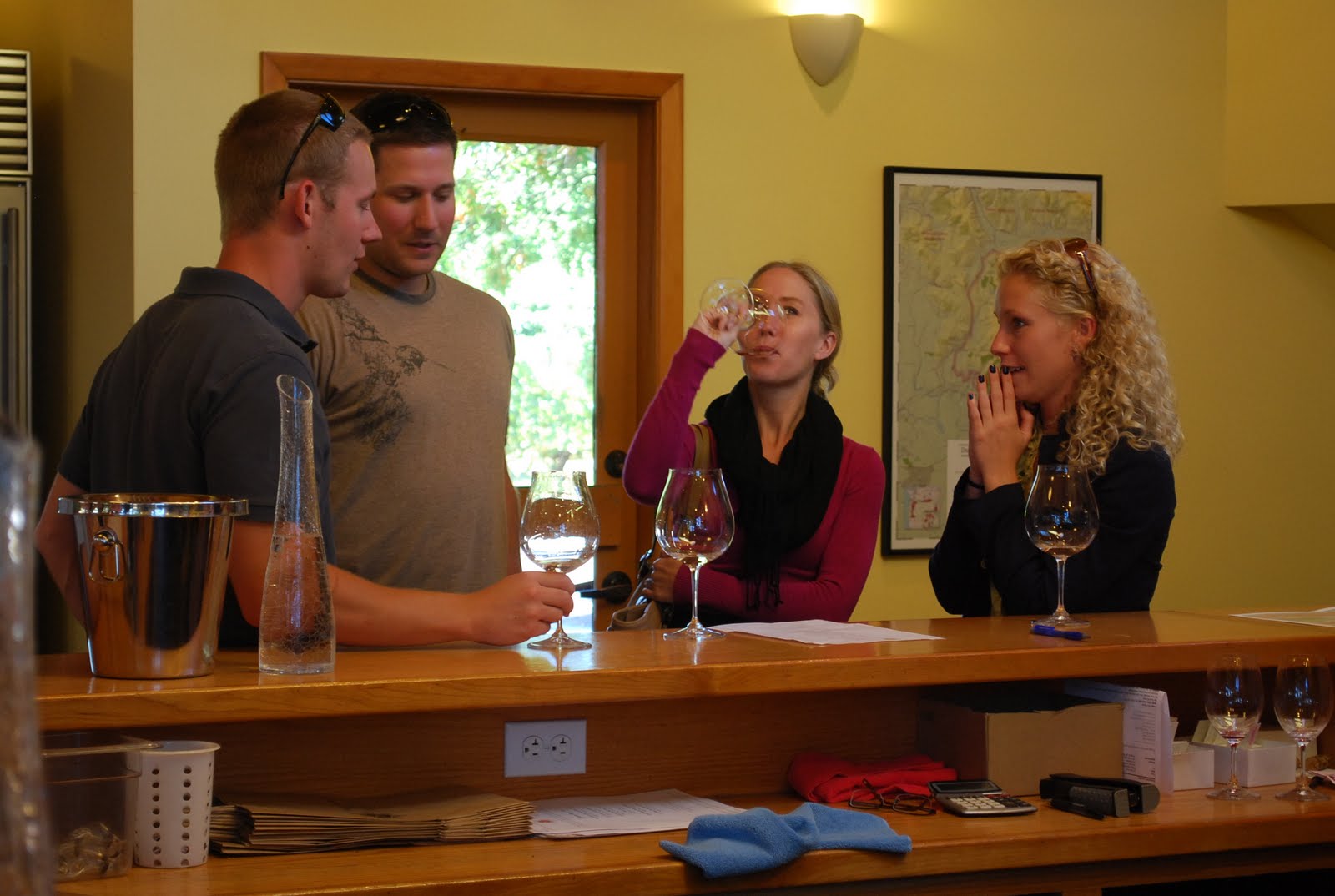
1. Limit the number of wineries you plan to visit to three or four. It’s tempting to try to taste as much as you can, and to try and stop at every winery you pass by. But squeezing too many visits into one day not only limits your overall experience, it just might ruin it. Take your time, sit on the decks and soak up the view, walk the grounds, the vineyards or the cellar if permitted. Talk to the tasting room staff or the winemaker, if they’re around; they usually love to share their knowledge about wine and their personal stories with those who show interest.

2. Avoid wearing perfumes, colognes, heavily scented body/hair products and lipstick. Strong chemical aromas will mask or even alter both the aromas and the flavors of the wine… not only for you, but also for wine drinkers around you, so be considerate. Lipstick will immediately turn your pourer off. One look at you and all they can think about is the extra time and effort it will take to wash and buff your glass special so the next guest isn’t wearing your lipstick too.

3. Don't chew gum. It’s not school, but you’re there to taste, so that's all I have to say about that.

4. Leave the kids and dogs at home. It's not fun for children shadowing their parents all day as they drive from winery to winery, and no, tasting room employees don’t double as babysitters and won’t entertain them. So, while it sounds like Fluffy would have lots of grounds to roam, vineyards to explore and moles to chase, most wineries don’t allow pets on the property (as they often have their own). Exception to the rule: Do your research first and select one winery with picnic grounds and an outdoor activity like bocce ball, horseshoes or disc golf to keep the kids busy while you sip away (but still leave the dogs at home).

5. Be prepared to spend a little cash (or to swipe the plastic). Once upon a time, wine tasting was a free activity, but like my youth, those days are long gone. If you’re prepared to spend roughly $10 per person at each winery, you won't have any disappointing surprises. You're not obligated to buy anything, but tasting rooms are actually in business to sell wine. So, if you like something or enjoyed your experience, take home a bottle and take home the memory. Some wineries will even waive the tasting fees with purchase.

6. A little preparation goes a long way. Have a cooler on hand to store your purchases. It can get quite warm in the car while touring the countryside (think sauna). You'll want to protect the precious bottles of wine you bring home. Nothing will ruin your day faster than an expensive bottle of cooked wine.

7. Bring a lunch, buy a bottle and stay awhile. It’s not speed dating for wine—no need to rush off to the next. Pull up a chair and watch the grapes ripen. Slowing down never felt so good.

8. Remember the five S’s: swirl, sniff, sip, savor and spit.

9. Yes, it's OK to spit and dump, in fact, please do! Spit buckets are conveniently located on every tasting room bar (or you can ask for your own cup to be more discreet). Though spitting can be awkward and perhaps even messy for novice wine tasters, a little backsplash is much more desirable than a stumbling drunk. It might seem wasteful and perhaps even rude, but the best option (if you’re not driving) is to have a small taste of everything you’re poured and then dump the remaining wine instead of drinking the whole glass.

10. Keep in mind you’re a guest on someone else’s property. Wineries can be a dangerous place if you wander where you shouldn't go (remember Agustus Glup in Charlie and the Chocolate Factory?). Wineries are often family businesses with the family living on the grounds, so don't open closed doors and always be respectful. Wine can be an aphrodesiac, but wait till you get home (or at least until off winery grounds) to take your clothes off. Many wineries actually have cameras in place, and the staff (while having great stories to tell for months) really don’t enjoy having to chase half-naked (and fully naked) people off the grounds… and yes, I do speak from experience.

Wine tasting is a fun activity and whether or not you follow these simple suggestions, you’re on your way to creating memories to last a lifetime. These tips will ensure a successful and embarrassment–free tasting experience. So, now that you now how to do it, all you need to is get out there and taste, enjoy!

Monday, July 12, 2010

A Tasting Room Nightmare

This is my first attempt at video, animation and satire (well, I may have tried satire once before). Watch the world's most obnoxious tasting room guest as he drives the staff crazy!

Discover Aliens, Ghosts and Great Wine in McMinnville

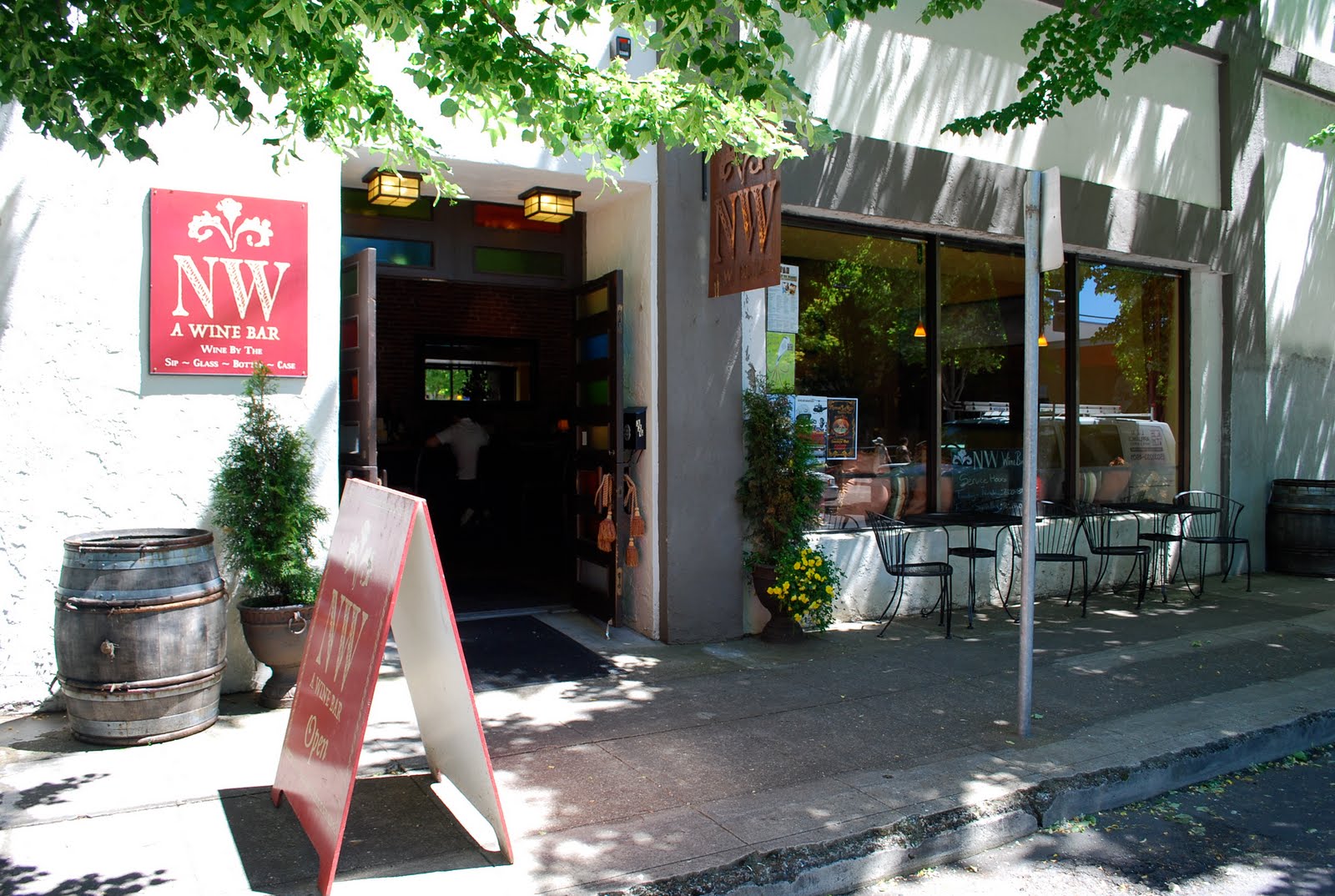
McMinnville, Oregon—home to Linfield College, the Evergreen Aviation Museum, the largest annual UFO gathering in the Pacific Northwest (second in the country to Roswell, NM) and a fantastic wine bar or ten. Though I didn’t see any aliens in town that day, I did hear the voice of McMinnville’s past luring me to the couple of tasting rooms I hadn’t yet visited and found myself magically bellied up the bar at the NW Wine Bar.


General Manager Jonathan Trusty (JT) described the NW Wine Bar as a tasting room and bottle shop on steroids, which was a fairly accurate description. Located in a spectacularly renovated historic location, with high ceilings, stained glass windows and comfortable seating, the NW Wine Bar’s all pumped up, featuring 25 different Oregon wines (the company produces) from 15 wine growing regions and 55 vineyards. Wines are offered by the sip, glass, flight, bottle or case and a tempting menu of small bites, grilled Panini sandwiches, soups, flatbread pizzas and desserts are available to make the experience complete. JT spoke passionately about being able to open whatever bottle he thinks may dazzle a particular guest, knowing he can then add it to the tasting menu of by-the-glass pours for other guests to enjoy as well.


The NW Wine Company, founded by winemaker Laurent Montalieu (of Solena Grand Cru Estate) in 2003, produces nearly 85,000 cases for over 25 different clients out of the old Mrs. Smith’s pie factory. The wine production facility utilizes some of the most innovative winemaking equipment in the US, including two receiving lines to process the fruit at warp speed, two Europress destemmers, 100% temperature and humidity controlled barrel rooms, rare rotary fermentors and a Ganimede fermentation tank that harvests and utilizes the energy produced in the fermentation process (something I’m still not sure I understand).

The wine bar focuses on educating guests about Oregon wine and JT is as generous with his knowledge as my Jewish mother is with food. While JT tasted me through his vision of the NW Wine Company, it was as if the wines all came together to tell a cohesive, synthesized and colorful story of region, winemaking style and limited production wines that have been crafted, nurtured along and allowed to reach a potential they could never have reached otherwise.

It’s for all these reasons (and more) NW Wine Bar is a must visit on your McMinnville wine tour… exquisite wines, a hospitable staff and a chic, contemporary, yet historic venue to enjoy it all in. One tiny caveat, be ready to shell out more than just a couple of bucks for perfection.


As if going from day to night (so if you decide to do this tour, I’d actually recommend going here first), I next found myself in the Golden Valley Brewery unable to both peel the patrons off me or get the bartender’s attention while I stood there aiming to taste their two house wines. Eventually, I was poured a glass of 2006 Willamette Valley Pinot Noir from Golden Valley Vineyard in a granny wineglass (small and thick), but the first swirl sadly revealed chunks of cork floating around in it. When I pointed this out to the bartender, instead of pouring me a new glass, he took a spoon and fished the cork out for me… so kind. After all that buildup, the wine unfortunately tasted overly oaked (or was it over-corked?).


The 2006 Oregon Big Red was an unmemorable blend of Merlot, Syrah, Cabernet Sauvignon, Cabernet Franc, Sangiovese, Grenache and Pinot Noir. The Golden Valley Brewery’s wines are both made by prominent winemakers whose wines I’ve often enjoyed, however, these I did not. I perused the menu and determined the wine’s not what people come here for. If I choose to visit this place again, I’ll be sure to order some pub food and stick with the beer (they looked mouthwateringly deeelish), you should too. Until we sip again…

Cheers!

Friday, July 9, 2010

A Couple of Bloggers Unite at Owen Roe


I don't typically make a habit of accepting invitations from strange men, but when fellow blogger Josh Chang of PDXploration asked me to meet him for a private tasting of Owen Roe wines, I knew it was one invitation not to be overlooked. Not only was I intrigued to learn about a fellow Portland blogger who focuses on all the undiscovered and delicious things around Portland, I was also dying to pick his brain for the inside scoop on where to dine. The fact that I'd actually been meaning to visit Owen Roe and would be able to cross this tasting room off my list was just the icing on the cake.


I’d heard Owen Roe’s winery has no sign and is not-easy-to-locate. When given directions to their facility, I was instructed to look for the driveway flanked by English ivy (thanks portlandoregonwine), really? Stealth locale discovered (are they trying to keep people away?), I joined my buddy Josh and his visiting family for a private tasting of Owen Roe’s wines. Owen Roe sources the fruit for their wines from premium vineyards sites in Washington and Oregon and operate a production facility in Washington as well. In addition to the Owen Roe label, they also produce Sharecroppers, O’Rielly’s and Corvett A.


To say I was immediately impressed with the 2008 DuBrul Riesling ($21) would be an understatement—blown away might have been a more accurate description. I’m not typically a huge Riesling fan, but the wine was slightly worshipable—viscous, almost honey-like in color and sweet on the nose, presenting apricots and candied almonds. The minerality and brilliant acidity played well against the hint of residual sugar, and though there is .4% RS, the wine was far more dry than it was sweet. The fruit for this luscious bottling came from a small block of grapes in one of the oldest vineyards in Washington’s Yakima Valley.


Inquiring about the winery’s intriguing black and white labels was a bit like opening up Pandora’s Box. Rose told us story after story of Owen Roe O’Rielly (anscestor of founder and winemaker David O’Reilly), a 17th century Irish patriot who battled all his life with rival Oliver Cromwell. The Riesling’s hand-drawn label features an original woodcut of Clough Oughter Castle where Owen Roe eventually died. Each wine and each label depicts a different chapter in the Owen Roe saga, utilizing the back label to convey the story.


One of the most memorable and impressive of these tales (though I haven’t a clue if the wine is as memorable and might have even given up my left hand to try it) was the story behind Sinister Hand (a blend of Rhone varietals from vineyards in Washington State) whose label prominently features a severed bloody hand. Legend has it, during a boat race across a lake between the O’Rielly’s and the O’Neills, whomever touched land first would be awarded the land as a prize. Land being so valuable, when the O’Rielly’s were losing, one of the crew cut his own hand off and threw it onto land to claim their prize. Rose retold the story with such grim reality, it felt almost like a Monte Python movie, “It was just the left hand… no big deal,” she said sinisterly.

The Owen Roe Kilmore 2008 Pinot Noir was thin and elegant with mouthwatering acidity and earthy components of soil, mushrooms and leather. The mouth opened up to reveal dark, black cherries, blackberries, coffee and a hint of floral perfume that was all but beguiling. Whereas the 2007 Cabernet Franc Mystica Rosa was a bit too vegetal for my taste, with bitter tastes of green pepper that stole the show (and not in a good way), the 2006 DuBrul Cabernet on the other hand, was, in a word, fabulous. Rich and complex flavors of black fruit and lingering spice fill your mouth, laying across your tongue like the finest silk sheet… purely luxurious, especially at $72 a bottle.


Owen Roe also makes a late-harvest Semillon called “The Parting Glass.” The 2007, tropical and floral on the nose, tasted of pineapple, figs, vanilla and toasted caramel… a lovely finish to a great tasting. The Parting Glass is a tribute to winemaker David O’Rielly’s father and the bottle features a popular Irish toast used both to mark the end of a gathering and to honor those who have died: “But since it falls unto my lot that I should go and you should not, I’ll gently rise and softly call, good night and joy be with you all.” Until we sip again…


Cheers!

Thursday, July 8, 2010

Anything But Pinot Gris - Oregon Whites For Summer Sipping

Now that summer may finally be here, the time for enjoying white wines with everything has finally arrived. So, in the spirit of the season, I've taken a closer look at some Oregon whites perfect for warm weather and lighter summer fare. Read about it on Cork'd.

Monday, June 7, 2010

Boutique Wineries Offer Rare Tasting Opportunites

Like the “Shot Heard Round the World,” Memorial Day triggers the start of the wine tasting season and since many of the smaller boutique wineries are only open two holiday weekends a year, it was also the shot that signaled me to get out and taste as many of them as I could.

Quailhurst Vineyard Estate
Founded by: Dr. Marvin Hausman
Winemaker: Joe Dobbes
Vineyard: 35 acres planted in 1998 on 75-year-old estate


Quailhurst has a stunning location, perched high atop Parrot Mountain in Sherwood and makes exceptional estate wines of high quality and character. The grounds of their unique estate also feature riding arenas, stables and pastures to support their horse breeding and Dressage center located adjacent to the grape vines.

Hawks View Cellars
Founded by: Jack and Willie Kemp
Winemaker: Ryan Harms
Vineyard: 130-acre estate, 45 acres since in 1991


Hawks View Cellars is a relative newcomer on the scene and making a huge splash with their finely crafted wines, comfortable tasting room, stunning five-peak view and their proximity to Portland.

Vercingetorix (VX)
Founded by: the Hall family in1959—owned and operated by the grown children since 2009
Winemaker: Laurant Montelieu and Jason Silva
Vineyard: 11 acres planted on the 210-acre riverfront farm


No, it’s not the name of a newly discovered dinosaur but rather a fun and unpretentious winery tucked away in Newberg next to the Willamette River. Vercingetorix is named for a Gallic hero who is recognized for saving Burgundy’s Pinot noir from Roman invasion, VX converted an old apple orchard to vineyards and is producing grapes using a Geneva double curtain trellis (Oregon growers typically use the Scott Henry trellis system).

Durant Vineyards at Red Ridge Farms
Founded by:Ken and Penny Durant in 1973
Winemaker:Partner with different winemakers who their purchase grapes such as Jesse Lange and Dean Fisher.
Vineyard:Over 60 acres of some of the oldest vineyards in the Red Hills of Dundee.1


Durant Vineyards sells their fruit to 73 premium wine producers in the Valley, finally creating their first estate wines in 2003. Their tasting room is located on Red Ridge Farms, which also showcases the family’s herb and specialty plant nursery, a unique gift shop, intimate Bed and Breakfast and Yamhill Valley’s first olive oil pressing facility. Cottonwood Winery and Cancilla Cellars were also pouring wines there for the holiday weekend.

Le Cadeau/Aubichon
Founded by:Tim and Deb Mortimer in 1997
Le Cadeau Winemaker:Different for each bottling
Aubichon Winemaker:Jim Sanders
Vineyard:: 28-acres of rocky soil planed in 1999


Aubichon purchases all their fruit to produce their acid-driven wines while Le Cadeau uses only estate fruit from their Parrot Mountain vineyard located on basalt and volcanic soil. Le Cadeau wines are each made by a different winemaker and each show an honest commonality of vineyard.

Ken Wright Cellars
Founded by:Karen and Ken Wright in 1994
Winemaker:Ken Wright
Vineyard:55 acres located throughout the Willamette Valley


Ken Wright has the distinction as being known for being one of Oregon’s first winemakers to craft single vineyard designates. I have to put this out there too, though they very nicely let me in at closing time, they were also the first tasting room I’ve visited to charge me a fee. And though I at first balked at the $20 charge (I don’t drink, I don’t eat, I don’t linger and I’m going to write about them), but Ken Wright was so damn charming, in the end I nearly forgot I paid them money to blog about them.

Carlton Cellars
Founded by: Dave Grooters and Robin Russell in 2001
Winemaker: Dave Grooters
Vineyard: 22 acres in the Yamhill Carlton AVA planted in 2003


Carlton Cellars opened their modest tasting room in 2007, debuted its first commercial bottling in 2007, and as a tribute to the ocean, which so profoundly influences and defines its wine, they’ve named each of their wines for a special place along the Oregon coast. Saturday, June 19th kicks off their not-to-be-missed Summer Vineyard Lunch Tour where for $35 (or $90 for all three), you’ll enjoy a lunch feast and tour of the vineyard at three integral times of the growing season (bloom, lag and veraison).

Raptor Ridge Winery
Founded by: Scott and Annie Shull in 1995
Winemaker: Scott Shull
Vineyard: 18 acres on the northeast side of the Chehalem Mountains

Raptor Ridge (who placed third in my recent tasting of Oregon Rosés) acquired its name from all the birds of prey that share the winery’s 27-acre estate. Their vineyard is actually named Tuscowallame, which is an indigenous word meaning “place where the owls dwell.” Taking their names seriously, instead of naming the vineyard blocks after family members (like so many wineries do), each block is beautifully named to honor the foreman who planted it (Adalfo, Macario and Dustin).


Tasting so many wineries in a day left little time for detailed tasting notes, so while I haven’t highlighted the standout wines like I typically do, I would like to mention my favorite wines of the day came from Quailhurst (though the horse stable tasting room added to the overall experience, the smell unfortunately didn’t contribute to the bouquet of the wine at all), Durant Vineyards and Ken Wright.

Inspiration for the photo collages comes from fellow blogger Josh, whose blog PDXploration details cool fun and unique things to do in this fair city and always features gorgeous photography. You can find him on Twitter: @PDXploration.

The whirlwind weekend wrap-up unbelievably continues next with Anam Cara, Laura Volkman, Natalies, Estate, Anderson Family Vineyards, Monks Gate, Ghost Hill Cellars, Stag Hollow and Sejourne. Until we sip again…

Cheers!

Wednesday, May 26, 2010

Illahe - Is it the Name of a Winery or a Tropical Island?

Illahe, it sounds like it could be the name of some exotic island I wouldn’t mind being shipwrecked on, but it’s actually a Chinook jargon word meaning soil, earth or land. Illahe Vineyards and Winery, located in Dallas, Oregon, aims to produce wines reflecting the variety of soil, earth and land on their 50-acre estate.

Founder, Lowell Ford has always been a visionary, growing wine grapes in Oregon since 1983 and then helping to create the Northwest Viticulture Center at Chemeketa Community College.

One of the things that drew me to Illahe Vineyards initially was how creatively they go about being environmentally conscious; for instance, they use horse-drawn trailers to harvest their grapes (see my previous post 10 Oregon Wineries Making One Small Change). Their marketing brochure advertises how they crush their fruit using the traditional French method of pigeage. My understanding of traditional pigeage means that naked men press the ripe fruit and skins down with their feet. I didn’t ask how traditional their pigeage was, but I sure am wondering!

Bethany Williams started my tasting off with their 2009 Viognier aged entirely in stainless steel yet thick with tropical aromas of mango, pineapple, peach and banana and beautifully bright acidity. Illahe started producing this wine on a fluke, when they got some of the fruit from Albany for free (score of the century), and it’s turned out to be a real keeper. The 2007 Pinot Noir Willamette Valley was deliciously mouthwatering and showed succulent raspberries, tart red cherries with a long, spicy cinnamon finish.

In honor of Earth Day, on the day I visited Illahe, there were several wineries showing their goods as well:

WildAire Cellars was founded in 2005 as the shared dream of Matt and Jean Driscoll of McMinnville, Oregon. The Driscolls produce their wines at Illahe’s winery and actually use some of Illahe’s fruit as well. The WildAire 2008 Timothy Pinot Noir, named in honor of Matt’s father who passed away two years ago, was clearly a fine tribute with lush flavors of wild raspberries, rainier cherries, vanilla and lovely yet lingering cinnamon spice. The 2008 Pinot Noir Reserve had considerably more new oak and showed a less fruit-forward and more complex nose of cherry, rhubarb, tobacco and rose.

Michael Lundeen is the owner, winemaker and viticulturalist for his tiny backyard vineyard, producing his Genius Loci wines at Illahe’s production facility (and is also Illahe’s winemaker). He grows the Pinot Gris for his 2008 Cuvee Desiree, which was aged in neutral oak and showed incredible depth with flavors of pear, almond, apple and ginger. When he told me he blends it with 5% Gewürztraminer, I better understood the spicy and savory notes underneath the fruit. The Genius Loci 2008 Pinot Noir was quite remarkable with a nose of blackberry bramble, cherries, tobacco, black tea and a floral delicacy that played against the kicky white pepper finish. The real star was his 2007 Syrah from Folin Vineyard; there was so much going on, I’m not sure where to start. First, I picked up two aromas, then four… next thing the wine’s exploding in my glass with plums, currants, licorice, chocolate and eucalyptus. The wine had a broad mouth, with medium-to-firm tannins and generous acidity that balanced out the fruit and spice flavors—gorgeous and memorable.

On my way out, I stopped and visited Illahe’s worker horses.They came up to say hi to me until they realized my carrot wasn’t a carrot after all, but a camera instead and tried to get away—say cheese! What I really wanted to do was climb up on one of their big, warm, bare backs and gallop down a remote, sandy beach somewhere. I mentioned my desire to escape to an exotic, tropical island, right? Perhaps if I said “Illahe, Illahe, Illahe” and clicked my heels together I’d get there. Until we sip again…

Cheers!

Thursday, May 20, 2010

Lose Yourself In Time at Helvetia Vineyards

If you’re looking for a break from fast-paced city life and seeking some long lost country-style hospitality, you’re sure to find it at Helvetia Vineyards. Established in 1982 by one of the friendliest men in Oregon’s wine industry, John Platt will guide you through his wines, talk to you about the farm’s rich history and, if you’re lucky, he might even hop in your car for a ride up the road to give you a tour of his winery.

Founders John Platt and Elizabeth Furse Elizabeth planted grapes in 1982 originally to supply home winemakers and actually hadn't considered making wine at the time. Their intent was to grow something to satisfy the requirements of farm tax deferral, and wine grapes seemed the likeliest of crops. Later, when these very same home winemakers started winning awards, John's interest in winemaking was sparked. 1996 brought about their first commercial crush and they’re now producing 1,300 cases of estate wines from their 10-acre vineyard located on a southwestern face of the West Hills at the northern tip of the Tualatin Valley (which is actually still within the Willamette Valley).

Winery mascots Jake and Coco are the real greeting committee at Helvetia Vineyards, and even on a spring day that was as soggy as breakfast cereal after sitting in milk a bit too long, who could possibly resist sloppy, wet kisses from a face like this?

The winery’s visitor center is located within a 100-year-old historic farmhouse which now features a display of some of the original winemaking equipment found in the cellar as well as hammocks, horseshoes, croquet and picnic tables to help make your country retreat complete.

While admiring an old framed photo of the original residence, John relayed the story of how this photo was actually a postcard sent to the owner, Jacob Yungen, from his daughter Elise expressing her troubled situation as a single mother while trying to raise her young children. She had mailed it from Reedville, Oregon with a message scrawled on the back asking for help. Looking at that ancient photo of Jacob sitting on the front deck while his daughter Elise gathers her children at the back door moved me in a way which seemed to send me whirling backwards through time. I wondered who took that photo. I could imagine how drastically different her life must have been—to be a woman in 1900. Can’t you just feel their struggle? As I looked into their faces, I tried to understand their relationship. Why is Jacob sitting on the front deck while his daughter and grandchildren stand out back? The house’s air was thick with stories of labor and love, of people and time and I wanted so much to just breathe them all in; yet their secrets remained as elusive as the apparitions themselves. John brought me back to the current century by offering me a tasting of his wines.

Miss Kitty (the resident floozy) affectionately swirled around my feet as I swirled my wine in my glass. She kept me company while I enjoyed a 2007 Chardonnay that was a bit like that tropical vacation I so badly need. With notes of banana cream pie and kefir lime adding a nice twist of tartness, it was like eating dessert while on that tropical vacation… double bonus, all for the value price of $13.00. Ka-ching!

The 2008 Pinot Noir had just been bottled three weeks prior to my visit, and though very young and fruity (put that baby to bed), amidst the sweet strawberries and tart cranberry smell, I detected a bit of barrel funk that’s sure to add elements of intrigue as this wine develops. John offered me a bit of smoked salmon, which brought out a lovely earthy component in the wine, similar to freshly dug truffles. He said he gears his wines towards smoked salmon, and I don’t know how he does it, but he’s right, the combination was very complementary.

John didn’t have to twist my arm to convince me to drive with him over to the nearby winery for some barrel tasting. Jake and Cocoa apparently didn’t want to miss the opportunity either as they ran alongside the car trying to keep up. I thought I lost them, but apparently, they knew just where we were headed and caught up with us before I could even park the car. The wines in the barrel room were listening to some Jazz a la NPR’s Prairie Home Companion (so that’s where that funk in the wine came from) while we tasted an 09 Pinot Noir already developing some nice complexity showing similar moist earth and truffle notes as the 2008 vintage. Sensing I must be a rosé fan, John went to great lengths to siphon off some 2009 Pinot Noir Rosé for me from the Rose Vineyard, a one-and-a-half acre block that doesn’t ripen up quite like the rest. The wine was vibrant and teased my nose with smells of comforting memories of childhood—bubble gum, watermelon and strawberries. Like a fountain of youth, too bad it wasn’t bottled yet.

I dropped John back off at the old Victorian estate and it occurred to me how history has a way of shaping perspective, molding thoughts on your own reality like a lump of clay. Looking up at the windows of the house, envisioning whose faces have looked out of that glass over the years, it occurred to me how closely connected we all are no matter how much time separates us. When Jacob Yungen wrote home about his new life in Oregon, he said, "The North wind howls here every time it frosts. However, the grapes often ripen full and wonderful." So, the house is still here, there are just new faces peering out the windows. The grapes are still ripening, wine is still being produced and families are still gathering on the farmhouse estate where time has a way of just slowing down so much, it’s almost as if it never existed. I guess things haven’t really changed all that much. Until we sip again…

Cheers!

Monday, May 17, 2010

Tasting Room Etiquitte, Things Everyone Should Know

Memorial Day weekend typically indicates the start of winery touring season almost like a pistol signals the start of a race. As more and more people become aware of what a fairly inexpensive recreational activity wine tasting can be (I said wine tasting, not wine buying, though hopefully the former does lead to the latter), and with tasting rooms popping up quicker than dandelions, wineries may often find themselves pouring to a packed house. There are some things you should keep in mind which can help you plan a winning winery tour day, you’ll find them in my article on Cork’d. Until we sip again…

Cheers!

Monday, May 10, 2010

Hawks, Eagles and Exceptional Wines

What does it mean when you’re driving and you see three separate coyote roadkill carcasses? My first thought was to call my friend Rachel and ask her if she’s ever tried coyote for dinner. My next and almost simultaneous thought was, “Oh shit, it’s a Three-Coyote-Roadkill Day, that can’t be good. I should probably just turn around and head back home right now!”

Sometimes, while out touring the countryside, often lost but looking for a specific off-the-beaten-path winery, I make a game out of spotting hawks. It goes back to living in the mountains in Colorado where my main source of entertainment on long daily drives to town was catching glimpses of those magnificent birds of prey who made their presence known only when their empty bellies forced them to find the quickest and easiest meal around—carrion (kind of like fast food for animals). That gift (the sight of these impressive birds) while beautiful in and of itself, always seemed to serve a greater purpose, feeling much like an omen, a prophecy of what the day held in store for me. If it was a One Hawk Day, it would probably be a good day, Two Hawk Day—even better. A Bald Eagle Day? Well, who knew what could happen—and so on and so on.

So when I passed not one, not two, but three separate (and fresh) coyote roadkill incidents in the span of 10 miles or so (without seeing a single hawk), I naturally wondered what kind of bad sign this could be. Thoughts of spiritual warnings were flitting like spring birds in and out of my head as I pulled into Kramer Vineyards, where instead of spotting hawks or eagles, I turned my head and saw the familiar twists of my friend Fred Gunton’s handlebar mustache instead and knew all would be just fine.

Kramer Vineyards, located just outside Gaston, was founded by Trudy and Keith Kramer in 1983 after some earlier experimentation with berry wines. On their 20-acre parcel, they’re growing Pinot noir, Chardonnay, Pinot gris, Riesling, Muller Thurgau, Carmine and Muscat with four acres scheduled to plant to Petite Munier and Gruner Veltliner.

When you arrive at Kramer, expect to be greeted by either or both of the resident labs, Cassie and Kosmo, and rest assured, they’ll keep you company while you linger on the delightful deck savoring the estate-driven wines. There’s a lovely wine barrel fountain (with fish), which serves a dual purpose, both providing guests with a little ambiance and also being the town’s largest dog bowl.

Kim Kramer-Kreiger, one of the winemakers, was pouring a selection of 2005 and 2006 vintage wines in their Reserve tasting lineup that were quite memorable. The 2005 Pinot Noir Heritage was a deep red color with a strong nose of red fruit (cherries, plums, raspberries) and a pleasing perfume of roses and a hint of vanilla. This wine opened up slowly, then revealed cherries, strawberries, cola and attention getting spice that’ll keep you coming back for more and make you wish you had a case.

Kramer Vineyards also produces a fantastic Merlot with from grapes from Walla Walla, Washington. The 2007 Merlot was rich and lush in my mouth, layered and complex showing pretty blackberry and plum fruit flavors on top of coffee, chocolate and a seductive finish of clove that’s spicy and sweet at the same time. I wasn’t crazy about their whites, didn’t try the Rosé, but the reds give anyone good reason to visit.

Still not knowing what message those coyote’s were trying to send me, I left Kramer feeling a bit mystical, wondering if there was a story there I’m supposed to tell. I often look to the universe for signs about which direction I should take at a certain crossroad, so I wondered. Am I at a crossroad? Is this a sign that’s meant to detour me? I realize now, in reflection, that I haven’t visited many wineries since this day… perhaps I took that detour after all. I’m a bit unsure of where I am, but I'm pretty sure it’s exactly where I need to be and with hope, my next day will be full of hawks, eagles and exceptional wines! Until we sip again…

Cheers!

Fred Gunton of Entertaining Wine Tours provides amazing personalized and customized tours of the Willamette Valley’s small boutique wineries, large estates and hidden gems. Give him a call to arrange your unique wine country visit today, you’ll be glad you did.

Monday, April 19, 2010

Dragging the Folks Along: JK Carriere and Barron-Wahl

With my parents in town for their coveted semi-annual visit, it seemed the perfect opportunity to drag my whole family along on my escapade tasting wine at every Oregon tasting room in a year… mom, dad, husband and son. Why not? After a brief stop in Sherwood at Rose’s Deli (because no family outing of mine would be complete if it didn’t include food—we are Jewish after all), and with the use of my dad’s handheld GPS, we leisurely made our way along the relatively unsigned roads through the nearby hills of Parrett Mountain; it was as if we were out for a Sunday drive… on Saturday.

Sunshine, blue skies and volcanic views set the stage as we meandered the mountainside where we located the rustic tasting room of Barrron-Wahl Vineyards. Barron-Wahl Vineyards, owned by Gordon Barron and William Wahl, is a very small producer on Oregon’s grand scale, with a mere 350-700 cases dependent upon vintage. As we mosied up to the bar of the seasonally open tasting room, Gordon brought their resident mouser, Kitty Guy, in for my mom to pet. Although Mom doesn’t drink wine (except the occasional sip of late-harvest dessert wine I might be able to talk her into if I’m feeling exceptionally patient), she is a good sport and she does like to pet every animal she can get her hands on. Though I too love all the furry friends, I thank you Dad for passing on your preference for wine.

Barron-Wahl planted their Pinot noir vineyard in 2001 and Joe Dobbs of Dobbes Family Estate and Wine By Joe has been making their wines since the first vintage in 2006. Marketing Manager Mickie Riverman poured us through the past two vintages and then sent Gordon off to find a rare bottle of 2006 for us to sample. While the wines where all quite good, I actually really took note of their 2008 Pinot Noir which showed unbelievable depth for a wine of its youth… sweet black cherry pie and vanilla balanced out with lovely savory notes of truffle and mushrooms. The tannins were firm yet already approachable and the vibrant acids, which would play well with food now, also indicated it would hold up with a little time too. Shayden (age 3) passed on the basket of toys in favor of a wine glass full of vintage 2010 H2O, sniffing and swirling like the rest of us, certain his wine smelled like strawberries—that’s my boy!

Mickie told me a bit about Gordon’s diverse background as being a professional car racer (hence the Porsche photos on the wall) and how he even invented some sort of blood separator, but when I asked about the Marilyn Monroe photo over the bar and the old Ms. Pac Man and Donkey Kong games in the corner, she took me aside to quietly explain how the tasting room used to be Gordon’s “Man Cave.” Ah ha… now I get it, but with Pinot like that, I’ll stress the words “used to be” because no man’s keeping me out!!

We returned to our vehicle where I marveled in the splendor of having both a driver and a navigator (if only for just a day) and programmed ourselves for J.K. Carriere Wines, also located on Parrett Mountain in the Chehalem Mountain AVA (American Viticultural Area). As I expressed exuberance at not getting lost for a change, my brilliant mother saw it as a cue to tell my dad he really needed a new GPS and should give me his old hand-me-down (as if—but you gotta love my mom for trying!).

J.K. Carriere’s located in a brand new facility, after producing and selling their first 10 vintages out of a hundred-year-old hazelnut drying barn in Yamhill County. In 2007, Jim Prosser purchased 40 acres on Parrett Mountain’s ridge, where the family has since planted two-acres and, as you read this is, gearing up to clear and plant more to vine. They’ve recently opened their modern and state-of-the-art winery production facility, barrel cave storage, sprawling grounds and sleek yet comfortable tasting room to enjoy it all. 

The name on the label is a melding of family names: J.K. Prosser and Paul Carriere and the wasp graphic serves as a very personal reminder to the owner about both his deadly allergy (not a good for a winemaker… have you ever seen a winery during harvest?) and also about keeping your friends close and your enemies closer.


J.K. Carriere makes a white Pinot noir produced using the same techniques as turn-of-the-century French Rosé Champagne and though it didn’t have any bubbles, it had a lot of zest and perhaps even a slight spritz which lifted the watermelon flavors to new heights. At $20 a bottle, their 2009 Glass White Pinot Noir is an absolute steal and one of those wines I wish I could have brought home by the caseload for an entire summer’s worth of sensational sipping. Their flagship wine, the 2007 Willamette Valley Pinot Noir, is a blend of some of Oregon’s best vineyard sites and showed a lot of personality. I’ve heard the average nose can only detect and distinguish four aromas at one time. I must have a really big nose, because I smelled at least five smells—cherry, strawberry, violets, cedar and allspice, just to name a few. In my glass, the wine showed equal presence with cherries, raspberries, currants, gamey meat and licorice… very complex and clearly a cornerstone wine, but the meatiness turned me off, as I tend to seek out more fruit, floral, earth and spice components (it’s just a personal thing).

Since J.K. Carriere’s all about the “family element”, Jim’s niece Jen Reynolds happened to be the wine slinger on the day of my visit. When I asked her to tell me something funny that’s happened there or something I can’t find out on the internet, a grin immediately spread across her face as she recalled the time when her uncle Jim (owner and winemaker) scared away all the nieces. He had just returned to Oregon after being in the Peace Corp in the Far East and was completely unrecognizable to even his family with a full beard and Fu Man Chu mustache. Thankfully Jim’s shaved since then and isn’t scaring anyone away anymore because you really wouldn’t want to miss his wines.

After tasting at just these two wineries, my parents were completely spent so we retired to the comfort of our leather couch to lounge and recover a bit before dinner. Dinner that night was enjoyed in the private wine cellar at Portland’s Veritable Quandary where I was put to the challenge of figuring out how the cellar was ordered. Being teased with the promise of a prize, I took the task seriously and wagered my winning guess. Unfortunately, there really was no prize except the weird but immense sense of satisfaction I got from actually figuring it all out.

I noticed Veritable Quandary’s featured wine that night was from Apolloni Vineyards and I couldn’t help but recall my blogpost about Apolloni Vineyards where I refer to their winemaker Anne Hubatch’s Rosé as my veritable quandary of the day. A bit too eerily prophetic perhaps—it gave me chills! After a day’s tasting, two bottles of Oregon Pinot noir with dinner and a lovely late-harvest ice wine with dessert, my dad proclaimed he’d never drank so much wine in a day before. Oh Dad, welcome to my wonderful and very tasty world! Until we sip again…

Cheers!

Friday, April 9, 2010

A World Beyond Saké Bombs… Finally!

“Kanpai,” we shout a little too loudly as we joyously clink our baby teacups together shooting the warm yet slightly bitter rice wine quickly to the backs of our throats and down to our waiting and eager bellies. Another,” Kanpai”, followed by the token glass clink, but this time, the mini teacups full of steaming hot wine are dropped into our ice cold, tall glasses of Japanese beer (we called it a Saké Bomb), which we guzzle as if we’d been wandering a dry, dusty desert for days, our mouths parched with thirst. Our livers swollen with alcohol, we always added a bit of rice, seaweed and fish to the mix, just to keep things from sounding liked a badly dubbed Kung-fu movie where nothing moves in synchrony, and ultimately, to keep things down. Yes, those were my early experiences of rice wine—gloriously long high school and college meals of cheap sushi, saké and beer that typically got a bit out of control and were never much about food or wine appreciation. Such is high school and college, I guess.

Flash forward nearly 20 years and I’ll be honest, I haven’t consumed much saké since those earlier and more reckless days. Recently however, my good friend and winemaker for Anne Amie Vineyards recommended I try saké and encouraged me to specifically visit Saké One in Hillsboro to taste both their wines and their imported specials. So as a part of my quest and journey, I set out for the education of a lifetime; Tony from Saké One gave me my first and very valuable lessons.

Lesson #1: Drink your saké room temperature to slightly chilled. The piping hot saké served in sushi restaurants is served that way to mask the flaws, making it more palatable.

I then learned Lesson #2: Current leading experts agree, using a wine glass instead of a thimble is the preferable way to imbibe. Men, you’ll be pleased to know you don’t need to feel like you’re at a child’s tea party with your dainty pinky finger hanging out in Nowhereland. Wrap all of your manly digits around a real glass and enjoy. Saké stemware is available for sale and if you’re hosting a sushi party, it can add that fun level of authenticity (kind of like chopsticks verses silverware, I suppose), but it’s not necessary and any old white wine glass will really do.

Tony went on to teach me how saké is made with only four ingredients: water, rice, yeast and Koji-kin (a mold which helps convert the rice into fermentable sugars). Saké One uses domestic U.S. rice with Japanese yeast, while more traditional Japanese sakés use different varieties of rice to produce different flavor profiles. The water is another key component, brewers look for both purity and mineral content to impact sake’s flavor.

Although called rice wine, it’s probably a closer relative to the beer family since it’s made from fermented grains instead of fruit. And like beer, saké is best when consumed fresh, while in its youth, as opposed to being aged.

Saké One offers a food pairing flight, which I highly recommend. Similar to wine (and beer), the saké tasting experience is enhanced by thoughtful and complemented food pairings. I personally tasted through their portfolio without the food, but I wonder if my experience might have been different if I had tasted the different sakés with their suggested combinations. Would I have come away a saké convert?

Sake One is the only American owned sakery in the world. Their wines are bottled in eco-friendly glass, with bamboo labels, making them an excellent example of the Oregon wine industry’s commitment to being a part of the environmental solution. In addition to their Ginjo Junmai (pure rice) sakes, they also make fun infused sakes of Asian pear, coconut lemongrass, raspberry and plum. They encourage fans to experiment with their elixirs, and invented a series of Sakétinis adding a whole new dimension to mixology.

If you’re ever anywhere in the vicinity of Hillsboro, Oregon, I emphatically encourage you to visit Saké One —even if you don’t like saké… and sadly and admittedly, I don’t even though I enjoyed every minute of my stay. So, after visiting and tasting the real goods, I can wholeheartedly say, sorry Thomas, I’ve still yet to acquire a taste for rice wine. I did equate it to what it would be like drinking a real, handcrafted ale for the first time though—discovering there was a world beyond MGD—and I will certainly try saké again. With sakery tours daily, Saké One is a must-visit… look forward to both an education and an experience you won’t soon forget. Until we sip again…

Cheers!

For more information about Saké and a great read (except for the wisecrack comment about wine being made by monkeys) check out Joe's SixPack.

Monday, March 22, 2010

Tri-fectas and Cabernet… in Oregon

The first day of Spring brought with it cornflower blue skies and temperatures pushing 70 degrees… not exactly Portland weather, but welcome like a long lost friend. I arrived at Solena Grand Cru Estate Winery eager to taste their vertical of Cabernets (vintages 2003-2006). I’d previously tasted at Solena’s downtown Carlton location, but since then, they’ve opened their brand new estate winery, located on 80 acres in Yamhill, Oregon. The desire to visit their new location, a special tasting of Cabernets in the vast land of Pinot noir and getting out to enjoy the amazing weather made for an irresistible tri-fecta.

Emily Stoller-Smith (wife of Dundee Bistro Executive Chef extraoridinaire Jason Stoller-Smith) had an unexpectedly large turn-out for their Cabernet Sauvignon vertical tasting, but she handled it with grace, wit and style when she asked if any guests had their OLCC card and invited them behind the counter to pour. I felt inclined to do so… for a fleeting moment. Then I remembered I already work for nothing (except the pleasure writing my blog and hope that I’m entertaining my readers) and decided one unpaid job was quite enough.

Emily started off my tasting with a 2008 Pinot Gris. I took my glass outside to the peaceful deck overlooking the young vines and solar panels because nothing invites a glass of good white wine like the warmth of the sun’s rays. The day was a perfect pairing with my wine, which was almost equally perfect. The Pinot Gris was bone dry with intense aromatics of Asian pear, white flowers, starfruit and a delightful minerality, which added both body and character. I sat alone on the deck, tasting my wine while quietly absorbing my surroundings. To be completely honest, all I really wanted to do was buy a bottle, grab my sweetie and hold up with a picnic and some witty conversation while we lied in each other's arms soaking up the dreamy sunshine.

I returned to the company of the bar to start my Cabernet tasting and was slightly disappointed when one glass of 2003 was set out before me. I know it’s an obscene amount of glassware, but if you’re going to offer a tasting of four consecutive vintages, you should be able to revisit the wines for comparison of color, clarity, viscosity, and taste them all side by side; just my opinion. Here’s my impression of the wine (which by the way were being offered for sale as a collection for less than $100—screaming deal):

2003 Klipsun Vineyard Cabernet Sauvignon — A sweet and fragrant nose of blackberries, root beer, violets, tobacco and mint. The distinctive peppery finish was long and smooth. Well structured with a nice, dark garnet color and medium-heavy weight viscosity.

2004 Klipsun Vineyard Cabernet Sauvignon — Same black fruit core and same white peppery finish as the 2003, with firmer tannins, a big bite of dusty earth, licorice and savory cured meat.

2005 Klipsun Vineyard Cabernet Sauvignon — My favorite of the line-up, and probably because it was the most Pinot-like. It was silky and well balanced with a full nose of blackberry, mocha, violet and licorice that carried through on in the palate. I thought this wine was so good I even brought a bottle to take to dinner at my friend Todd's (who's also a fellow blogger and Pinot connoisseur). I hope it's as good as I remember!

2006 Klipsun Vineyard Cabernet Sauvignon — Still young tasting and very fruit-forward, thrusting wild raspberries in your face (compared with the black fruit core of the three prior vintages). The nose was soft, the tannins light and I just didn’t see a whole lot of complexity in this wine.

I was slightly amused when I sat down to take some notes and glanced at the guestbook next to me; the first name was Kevin Bacon with his email address, followed by George Clooney, of course. I think someone had a little too much Cabernet that day.

Witnessing me take notes with an old-fashioned pen and notepad, a conversation with a guest ensued about his helpful iPhone application for tasting notes. The world continues to get more high-tech and I struggle to keep up, yet I rest assured knowing there will at least never be an app for making wine. That’s one thing that will thankfully remain a form of art—an individual, beautiful and creative expression of fruit. Until we sip again…

Cheers!

Sunday, March 14, 2010

Superheroes, World Domination and Oregon Wine

When the Gaston Six gather together in one spot to pimp their goods, it’s surely an event you don’t want to miss. Like local Superheroes, picture an opportunity to taste wines made by true independent winemakers—ADEA, Biggio Hamina, Bishop Creek, Cancilla Cellars, Matello and Twelve—and you begin to wrap your head around the rare and unique artisan wines I sampled that day.

Showing respect for the house, I started first with the host, ADEA Wine Company. Founders, Dean and Ann Fisher produced their first three vintages (starting in 1995) under a different name, and in 1998 they changed their name to ADEA incorporating the first letter of each family member’s name (Ann, Dean, Erica and Adam). Their earliest vintages were crafted at Medici and later at Lemelson, but ADEA now proudly has their own winery (which additionally houses a collection of boutique indie winemakers) and a tasting room open on weekends.

I was poured a delightful 2005 Rose, crisp and tart with rhubarb and strawberries, and the perfect beginning to the wine journey dubbed Pinot Passion. I also truly enjoyed ADEA’s 2006 Momtazi Pinot Noir—deep, dark and brooding, with black cherries and pie spice finish… reminiscent of a late night diner after a rock concert.

Taking two steps to the left, I easily located Biggio Hamina, where I chatted with owner Todd Hamina who just turned out his 14th vintage. He told me how the name is a combination of his last name and his wife’s maiden name (are we seeing a trend developing?). While I was savoring the incredible aromatics on his wine, he humbly stated how “making a good Pinot Noir is akin to bragging about being the tallest midget.” Well, Todd, I don’t know about that midget thing, but you certainly have something to boast about. The 2007 Deux Vert Pinot Noir had a beautifully light and almost translucent color, a floral nose with lush red cherries and a hint of underlying earthiness; it was every bit balanced with fruit, lively acids and velvety tannins… flawless.

At Bishop Creek Cellars, the wines and vines are managed by one person, Jeremy Saville. The 60-acre site (originally planted in 1988) is located in a cooler micro-climate than many Willamette Valley vineyards, which Jeremy thinks results in later ripening fruit that gives the wine its distinctive and intense flavors while retaining the natural acidity. I admired Jeremy’s approach and his wines seemed to truly reflect his philosophy. Bishop Creek produces only estate-grown wines from their 13-acres of Pinot noir, Pinot gris and Pinot blanc. With Syrah, Arneis and Gruner Veltliner planted to vine in 2008, I’d keep my eye on what they’re turning out in the next few years.

Jeremy was pouring the best white in the house that day (IMVHO)—a 2007 Pinot Gris, 100% stainless-steel fermented and 100% true-to-varietal flavor. It had depth and character with an intense nose of Anjou pear and green apple, a delightful nuttiness (probably resulting from ripe grape seeds) and energetic acids that filled my mouth. The 2007 Barrel Selection Pinot Noir also spoke volumes to me. It was a delicate, light ruby color, yet incredibly complex and well integrated with layers of cranberry, pomegranate and rose (and at $22, it’s a very reasonable indulgence and one I would like to have speak to me again).

Next in the procession was Matello winemaker (or Masseur du Raisins as he whimsically calls himself) Marcus Goodfellow pouring his wine of choice… a 2007 Pinot Noir Souris. This cuvee (barrel blend), though not my favorite, was an excellent and very thought-provoking wine; it was acid-driven with red cherries, strawberries, rose petals, cured beef and spice. As I chatted with Marcus, the wine continued to open up showing how marvelously multifaceted it really was. By contrast, the 2008 Pinot Noir Hommage a’A&D was tight and grippy, but I think it was just in a shut-down phase (this sometimes occurs after bottling). With more time in bottle, this wine could turn out to be a gem and would be an interesting wine to revisit in the future. My favorite of Marcus’s wines was the 2008 Winter’s Hill… it was fruit-forward with silky tannins and hints of smoke and tobacco. When I asked Marcus about his label, he first explained the name Matello comes from the Italian for little fool. He chose the Court Jester graphic because in the old days, the jesters were the only person who could really speak their mind. I think he just might be something of a jokester himself, identifying with their playful nature. Matello is producing less than 1,600 cases per year, and as a testament to their “indie” ways, does not even have a website. (Need some help with that? I know some great peeps!)

Moving on down the line: Ken Cancilla escaped from the East Coast and the Telecommunication world to grow grapes in Oregon. Nine vintages later and he’s still living the dream; Ken has 23 acres planted in Gaston (22 to Pinot Noir and 1 to Chardonnay) and crafts his wines using only his estate fruit. Cancilla Cellar’s 2007 Chardonnay displayed bright citrus, soap and a minerality much like steeliness (despite being aged in neutral oak). It was racy, zippy and surely got my attention. The 2006 Pinot Noir showed a lot of red fruit like raspberries, strawberries, red cherries, as well as earth and some sweet, hot (almost port-like) cassis.

My last stop on my tour of the Gaston Six brought me to Twelve. Twelve is a family-owned 13-acre vineyard located four-miles west of Carlton. When I asked owner John Lenyo about the choice of name, he said it came from the movie Spinal Tap (I believe it’s a quote from Nigel Tufnel where he asks, “Will this one go to eleven?”). Twelve’s labels are always changing, but one thing remains consistent about them; they’re all beautiful examples of modern art. John was smart about engaging his consumer and making them think before he even gets a drop of wine into their glass. I might brand the term “intelligent seduction”; clever marketing that draws you in with its mystery. What does Twelve mean? What is this label? Why 144? The 2007 Reserve 144 refers not to a specific clone, but is in fact, their name (12) to the power of 12. And their second label (lower price point wine) is called Second Floor. Got something against thirteen? Whoa, too many numbers for me—I’m outta here!

I casually, and more in jest, refer to these artisan producers as Superheroes. Okay, calling them Superheroes might be a bit of stretch, they’re not fighting evil villains plotting world domination. But they are putting themselves out there every day battling the forces of nature, the environment, the economy, government and big business… all for the sake of wine. That’s dedication. So next time you’re pouring yourself a glass at the end of a long day, take a moment to think about what kind of passionate individual (hero) it took to get that wine there and make a quiet toast to them. Until we sip again…

Cheers!

Wednesday, March 3, 2010

Finding Freedom in Oregon Wine Country Tour

On the day I set out to meet newlywed friends Becky and Zack at Willamette Valley Vineyards, the countryside was both covered and quieted with fog thick as a shroud. Becky arrived ready for Oregon rain fully decked out in her trendy yellow galoshes free to splash in puddles as her heart so desired (missed photo opp number one).

Willamette Valley Vineyards is all about location, location, location. Just south of Salem, and ideally situated directly off I5, its sloping vineyards and watchtower facility regularly lure travelers from their destinations. Founded by visionary Jim Bernau in 1983, Willamette Valley Vineyards lies on a 50-acre estate of red Jory soil, where originally a plum orchard, blackberry bramble and scotch broom blanketing the land. The winery was built in 1989—that and the underground cellar were carved into an ancient volcanic flow (also part of what makes the soil so rich). Now owning more than 300 acres, Willamette Valley Vineyards has grown to become one of Oregon’s largest and most recognizable brands.

The winery offers public tours every day at 1:00 pm, but we were a bit early so we passed on the tour and stayed to taste—though I bet the tour would have been great and really feel like I missed something (if you plan to visit, keep this in mind)! Willamette Valley Vineyards is extremely focused on wine education and they’ve also built a new Wine Center in McMinnville complete with maps and information about the regional soils.

Katie, one of the friendly tasting room staff, greeted us with a pour of their 2006 Griffin Creek Viognier first and then their Chardonnay along with the classic story about how guests always say they don’t like Chardonnay until they try this Chardonnay… hmmmm, haven’t heard that one before. One thing about tasting with friends is you get honest feedback. I was tasting something unpalatable and indefinable in their Chardonnay which my friend Becky accurately termed “funk.” This is why I love tasting with friends. They not only tell you like it is, they even give you the words to accurately describe it—thank you Becky! Clearly not my favorite (or Katie’s, as she actually honestly admitted to us before our tasting – go Katie!!). My preferred wine was their 2007 Tualatin Estate Pinot Noir, smooth yet luscious, beginning with a huge nose of black cherry, blackberries and vanilla and following with a mouthful of strawberries, cranberries, smoke, graham and spice.

When it was time to leave, I followed my friends for a change, as they were endowed/armed with internet and GPS. Driving along washboard dirt roads, my Jeep was smiling as she was getting splattered with mud, feeling at home again after years of city driving. Zack was enjoying his German automobile a bit too much and I was struggling to keep up with him, but he eventually led us directly to Ankeny Cellars and the all the glorious surprises in store for us there, thanks Zack.

If you’re ever in the market for a winery “experience” go to Ankeny Cellars. This time of year (winterish), the outdoor ambiance is more imagined, but located next to Ankeny Wildlife Refuge, one could envision sitting on their deck sipping wine while watching predatory and migratory birds flying overhead. In the dead of winter and pre-dawn of spring, it was still just a graveyard of trellis and vine beholding all the promise of the coming season.

Kathy “The Wine Duchess,” as she’s been nicknamed by Ankeny’s winemaker Andy Thomas, graciously poured for us. Planted in 1982 by Joe Olexa (who has four college degrees, none of which have anything to do with growing wine), the vineyard is located on the southernmost slopes of the Salem hills producing roughly 2,000 cases annually all from estate fruit (they also sell grapes to Kings Estate, Redhawk and Brooks). As Kathy poured us the 2006 Hershey’s Red Pinot Noir, she told us how Hershey the dog has sadly been missing since November 2009. A beautiful tribute to Hershey though, and at $15/bottle, this wine with cherry and tobacco flavors was a tremendous value.

Another wine easy on the wallet and of particular interest was the 2006 Ankeny Crimson. With its strong Port nose, this Marechal Foch-Pinot Noir blend was inky and heavy with dark fruit. It was truly an unexpected combination, and in the words of Kathy our host, “it’s like two wines in one” … fascinating, and at $12.00 bottle, not a real risky investment either. I didn’t particularly care for it, but my companions thought it was good. We all have different palates.

Kathy told us we could take a hike—up the hill that is, past the grapevines, goats, cows, llamas and emus, to a one-acre clearing of 85 marked and 12 unmarked graves comprising Cox Pioneer Cemetery. I later learned that the cemetery was founded by Thomas Cox, Salem’s first storekeeper, and that his wife Martha was the first person buried there in 1949. An old barn from 1851 still stands on the property today, which I didn’t see and am still remiss about that lost photo opp too… another time, perhaps when the weather is fairer.

My friends and I parted ways as they continued to explore some regional favorites while I had the sweet wines of Honeywood Winery on my radar. I ventured back into the Salem hills once again GPS-free and flying by my own instincts and the seat of my pants. Quite miraculously, and without so much as a wrong turn, I arrived at Honeywood’s Salem winery.

Honeywood Winery officially opened the day after prohibition ended making it the oldest continually operating winery in Oregon. Founded in 1933 by Ron Honeyman and John Wood, it was originally called Columbia Distilleries (producing brandies, cordials and liquors), and though they objected to the merging of their names, somehow—and naturally—Honeywood stuck.

The winery offered an enormous selection of wines (18 different varietals!), above and beyond the mead and 34 fruit wines they’re famous for. When you’re handed a list with over 50 wines and told to select five, even the experienced taster is overwhelmed. I had no idea what I wanted to taste, I’ve never been there before—I really wanted to taste it all… or most of it. Well, actually I really don’t want to taste 34 different fruit wines (how many ways can you spell berry, ugh?), but five wines really didn’t give me enough of a chance to taste what the winery has to offer either. Of what I did taste, I enjoyed a non-vintage Muller Thurgau tart with lime and a touch of warm anise. As I drove away, I started thinking about those fruit wines and how I bet they’d be great for cooking—sauces, syrups, dressings and marinades of the most memorable kind! Hmmm, great thought… too bad it was moments too late.

I also thought more on tasting in the southern Willamette Valley. In addition to enjoying some great Oregon wines, you won’t break the bank and you’ll also find educational tours, history, hikes and beautiful settings to enjoy it all. I always treasure my drives through wine country; the roads are open and long and even with the windows closed, there’s this sense of having the wind in your hair—I guess it’s a feeling of freedom. I saw a huge Red Tail Hawk on a fence post right off the road, so I pulled over to try and capture his magnificent image on digital film. He sat still while I changed lenses on my camera and he sat still while I slowly and casually approached him. And as soon as I got close enough and brought my camera up towards my face, he was off with the swiftness of a glider, the grace of a ballerina and the sheer power of an airplane. I pouted a bit thinking the day’s theme seemed to be about missed opportunities, but as I saw the hawk flying off into the distance, I realized it was really about the glorious gift of freedom instead. Until we sip again…

Cheers!