Showing posts with label pinot gris. Show all posts

Monday, November 7, 2011

Flying High at Raptor Ridge's New Winery

Visiting Raptor Ridge’s stunning new location perched along the Northeast side of the Chehalem Mountains on Hillsboro Highway (which is technically located in Newberg, but actually closer to Scholls) had been on my radar for some time, yet somehow I’d not yet made it out for a visit. So, when the opportunity knocked to attend a social media event introducing their new digs, I didn't make them knock twice.


Graduating from a small horse-and-sheep-farm-cum-winery to a brand new state-of-the-art winery/27-acre vineyard estate with four-peak views gives a winery good reason to send out the engraved announcements showing off to the world exactly how far they’ve come. If I were Raptor Ridge, I’d be shouting from the slanted rooftops!

Raptor Ridge is as smart about social media and public relations as they are about making wine. Taking the media bull by the horns, they invited a room full of press, including writers from Portland Monthly, Yelp and OregonWine.com as well as several prominent freelance print writers and bloggers, for an afternoon #ReTweet (Twitter Retreat) of Raptor Ridge’s wines paired alongside great food and a tour of their functional yet elegant new facility.

We met at The Bent Brick in Northwest Portland where we were given a quick tour of the restaurant and kitchen (which would be serving our lunch), before being whisked away in a grape colored and covered chariot (special shout out to Wayne Winewizard) for a culinary education and excursion in wine country.

Raptor Ridge has been making top-notch Pinot noir and Pinot gris since 1995, giving them a strong foothold in the Oregon wine scene. But with their new winery and vineyard estate, the owners, Scott and Annie Shull, have found a place to both put down their roots and a beautiful facility to showcase what it is they do best, presenting the whole package… wine, hospitality, education (check out their wall of aromas and quiz yourself), and ambiance. And to top it all off, it's one of Portland's closest wineries!

The estate was originally a cherry orchard that produced for 65 years before most of the trees were removed to build the winery and create the 18-acre Tuscowallame Vineyard, which is now planted to several clones of Pinot noir and small amount of Gruner Veltliner. Tuscaowallame is the indigenous word for “place were the owls dwell”. Paying tribute to the property’s history, the Shulls preserved two of each type of cherry tree from the original plantings. 

As we sat in the tasting room, a sleek yet functional concrete, stainless steel and glass structure, and enjoyed their wines paired with savory bites from Chef Scott Dolich of The Bent Brick who says he sees wine pairings as discussion between good wine and good food, a storm quickly brewed up and passed over the vineyard leaving a magnificent and glowing rainbow in its wake.

Winemaker Scott Shull describes Raptor Ridge as “Two wineries in one. One side produces cuveés of 2500 cases for distribution to 26 states and the Virgin Islands, while the other side focuses on vineyard designate wines for their club and tasting room". Scott has a few tricks up his winemaking sleeve, which he shared with the group. One thing Scott does differently is that after the berries have been sorted and destemmed, he sorts them again for a third time to ensure the quality is up to his standards. Scott also uses a mechanical punch down machine, which I had never seen before (and I probably shouldn’t mention what it reminded me of), and though he’s a self-professed control freak and uses commercial yeast, he also experiments with wild fermentation.

Not exactly a cave, but we made our way into the barrel room, large enough to house 500 barrels and located 25 feet underground, where Scott confessed how he likes to listen to the quiet and breathe in the aromas of the barrel room. I understand the draw to go there to reflect on one's thoughts or find creative inspiration; the barrel room has a meditative and almost vault-like quality to it. The sounds are softened and muted, the oaky smells are magnified by the amount of wood and wine fermenting in such small space, the light is dim to protect the wine as it undergoes its transformation and the cool air feels a bit thicker, heavy with a certain mustiness or maybe it’s just heavy with energy. Whatever it is, it’s working for Scott… he’s making some great wines. If Raptor Ridge hasn't flown onto your radar yet, hopefully it has now. While making plans for your next Oregon wine country outing, be sure Raptor Ridge is on your hot list and in the meantime, join them on Facebook and Twitter.


2010 Pinot Gris (sold out)
Spectacular showing of lemon, grapefruit and pear, with subtle hints of tropical pineapple and a pleasant tease of almond. The wine displayed balanced acidity with an attractive minerality not found in many Oregon Pinot Gris.

2007 Pinot Noir Reserve ($35)
Simply gorgeous, makes you forget anything bad you may have ever heard about the 2007 vintage. Silky and spicy with a glass full of plums and crushed cherries.

2008 Pinot Noir Reserve ($35)
Noticing this wine was stylistically different than the others (I thought it was flawed and not my favorite), Scott described is as a noble reduction. When wine is not exposed to any air as it ages, it becomes reduced (the opposite of oxidized). Scott sees it as a feature, not a flaw in this case, adding interest and complexity. The wine was smoky and a bit funky, but soft with vanilla, coffee and a strong showing of ripe, black fruit.

2009 Pinot Noir Willamette Valley ($23)
Great value for a quality wine that’s rich and silky with cherries, pomegranate, vanilla, cassis, licorice and smells almost like walking through a pile of fall leaves.

2010 Pinot Noir Shea Vineyard (Not yet released)
Celebrating nine years of Shea fruit, Raptor Ridge does this vineyard proud. Though this wine had just been bottled six weeks prior, it was truly emblematic of what an Oregon vintage should be… pure, ripe and lush red cherry and blueberry pie flavors with a velvety mouth feel and a lingering finish loaded with peppery goodness.

Thursday, October 6, 2011

Welcome the Harvest Season with Parsnips, Cream and Bacon… Cheers to Vintage 2011

After reading this insightful post from Wind Up Bird Communications about the importance of being oneself, I was truly inspired. I realized that amongst other things, I am still a writer and fancy myself something of a raconteur, and these elements culminate in my blog, and to that I must remain true. So, what better way to revive this sleepy web log, which has been resting for nearly a year, than with an infusion of the 2011 harvest season?

Backstory: I got my foothold in the Oregon wine industry door working for Ponzi Vineyards as their Marketing Communications Manager many moons ago. I can remember the first harvest season I went through while employed there… it was soooo romantic. Heck, for me, just being on the grounds of a working winery was like a storybook story. Daily, I’d watch from my office window, as the timid deer, turkey vultures and quail made their welcomed appearances, wandering by with reckless abandon. With my front row seat, I could literally watch the grapes ripening on the vines as I wrote engaging newsletter copy and designed ads.

When “Crush” began, it was like a whole nother animal. The fruit arrived and the structured frenzy that ensued was like a magnificently choreographed dance. Everyone knew their part and everyone performed like the spotlight was on them… and for all intents and purposes, it was. The forklift driver was under tremendous pressure to lift and deliver tons of grapes to the people on the sorting line, who waited with baited breath like gold-panners ready to sift through the next drop. Everyone worked tangentially, in unison, to get the succulent fruit from the vineyard to the totes and into fermentation bins or the presses as quickly as they could, and this rarely happened in favorable weather conditions. On my way to the fax machine, I'd pass through the main winery building where the harvest crew would be punching down the grapes that were going through their period of cold soak… the fruit still so fresh and sticky sweet as the air became thick with the drone of the fruit flies. I'd make my way passed the cool barrel room, heavy with aromas of oak and age that would stop me in my tracks and force me to inhale their thick and dusky scent, practically making me forget the whole reason I was there in the first place. Oh yeah, the fax.

Trying to get my work done during harvest typically included dodging fruit totes, hoses, fermenter bins, people, trucks, forklifts, muddy boots and vicious yellow jackets… not that I'm complaining. It also included leisurely and satisfying harvest lunches prepared by professional chefs served with world-class wine at a table surrounded by international and interesting people all passionate about the same the thing… it was my first experience to truly live and breathe "Harvest".

In addition to the winery, the Ponzi family owns a restaurant in the heart of Oregon’s wine country called The Dundee Bistro. Back in the day (though I’m not sure if they do this anymore), they used to have the sous chef from their restaurant come up and cook for the hungry (understatement) harvest crew. They generously allowed the regular staff (me) to join in on the elaborate lunches, and since I’m one admittedly and easily wooed by fine food and wine, you know I was smitten. One day, Chef Eddie made us a Parsnip Soup with Bacon Crumbles, which he selected a gorgeous Ponzi Pinot Blanc to pair with. I’d honestly never really met a parsnip I liked prior to that, in fact for years, I'd been picking them out of my mom's homemade chicken soups.Yet here Eddie had fashioned them into a soup which immediately became tops on of my list of favorites. And with the wine, it was sheer perfection; the acidity cut right through both the cream of the soup and salt of the bacon while the tart and floral components in the wine were effortlessly balanced by the sweet and savory qualities of the parsnips. I might have even swooned or drooled… or both.

Eddie somehow pulled off a disappearing act during lunch before I had a chance to pin him down for the recipe, he must have been onto me. When I called him at the restaurant the next day in an effort to obtain cooking instructions for the most fabulous and surprisingly delicious soup I’d ever tasted, I believe he told me he didn’t really have an actual recipe for it, and might have even said that he’d just pulled it out of his ass. Well, it certainly didn’t taste like it came out of his ass, but he clearly wasn't going to be any help. Over the next several months, I experimented with many versions, until I came upon this one from Emeril Lagasse and the Food Network, which seemed to be as close to Eddie’s as I could really recall, though I've added nutmeg to his recipe for added intrigue. The addition of the potato crisps indeed requires a bit more effort, and though not required, truly is worth the trouble. Alternatively, you could serve it with a loaf of bread, make your own boule like my industrious blogger friend Todd at the Portland Charcuterie Project for a seriously yummy treat.


Each year, as the days grow noticeably shorter, the skies begin to darken and the weather starts to turn chilly and less forgiving, I turn to this hearty dinner to warm up with and celebrate the arrival of the fall season. Last weekend, at the Lake Oswego Farmers Market, after I found these prized parnsips and dry-cured Maialino bacon, I realized what time of year it was already and immediately knew what was destined be on my menu in the coming week. So tonight, in honor of  Crush 2011, I’ll be serving up this heart-warming and tummy-satisfying soup (inspired by Chef Eddie and the Ponzis), alongside an excpetional 2010 Willakenzie Pinot Blanc I’ve set aside especially for the occasion. Though I do wish you could join me at my table, you can recreate this meal on your own, with your own bottle of Oregon Pinot Blanc. You could also try it with Oregon Pinot Gris for another delightful pairing, either way I'm certain it will become a favorite of yours as well. I raise my glass of refreshing Pinot Blanc to the entire Oregon wine industry and send wishes of safety, fun and success for Vintage 2011… cheers!

Cream of Parsnip Soup with Potato Crisps and Bacon
By Emeril Lagasse

Ingredients
3 tablespoons butter
2 cups chopped onions
1 cup chopped celery
Salt
Freshly ground black pepper
1 bay leaf
1 teaspoon chopped garlic
1 teaspoon of freshly grated nutmeg

10 cups chicken stock
3 pounds parsnips, peeled and diced
1/4 to 1/2 cup heavy cream
6 ounces raw bacon, chopped
1/2 pound new potatoes, thinly sliced and soaking in cold water
1 tablespoon chopped chives

Directions
1. Preheat the oven to 400 degrees F.
2. Melt the butter in a 6-quart stock pot over medium-high heat. Add the onions and celery. Season with salt and pepper. Saute until the vegetables are soft, about 4 minutes. Add the bay leaf, garlic and nutmeg and stir another minute until the spices release their aromatics.
3. Add the stock and parsnips and bring the mixture to a boil. Reduce the heat to medium and simmer, uncovered, until the parsnips are very soft, about 1 hour.
4. Remove soup from heat and allow to cool a little. Discard bay leaf.
5. Using a hand-held blender, carefully puree soup until smooth. Stir in cream. Season with salt and pepper.
6. In a small saute pan, over medium heat, render bacon until crispy. Remove the bacon, drain on paper towels and reserve bacon fat.
7. Pour bacon fat onto cookie sheet and add the potato slices in one layer (because what isn't better cooked in bacon grease?). Put into the preheated oven and cook until potatoes are crispy and brown, about 5 minutes. Transfer potatoes to paper towel lined plate when done. Season with salt.
8. To serve, ladle the soup into serving bowls. Garnish with the crispy potatoes, bacon and chives.

Thursday, July 8, 2010

Anything But Pinot Gris - Oregon Whites For Summer Sipping

Now that summer may finally be here, the time for enjoying white wines with everything has finally arrived. So, in the spirit of the season, I've taken a closer look at some Oregon whites perfect for warm weather and lighter summer fare. Read about it on Cork'd.

Sunday, April 25, 2010

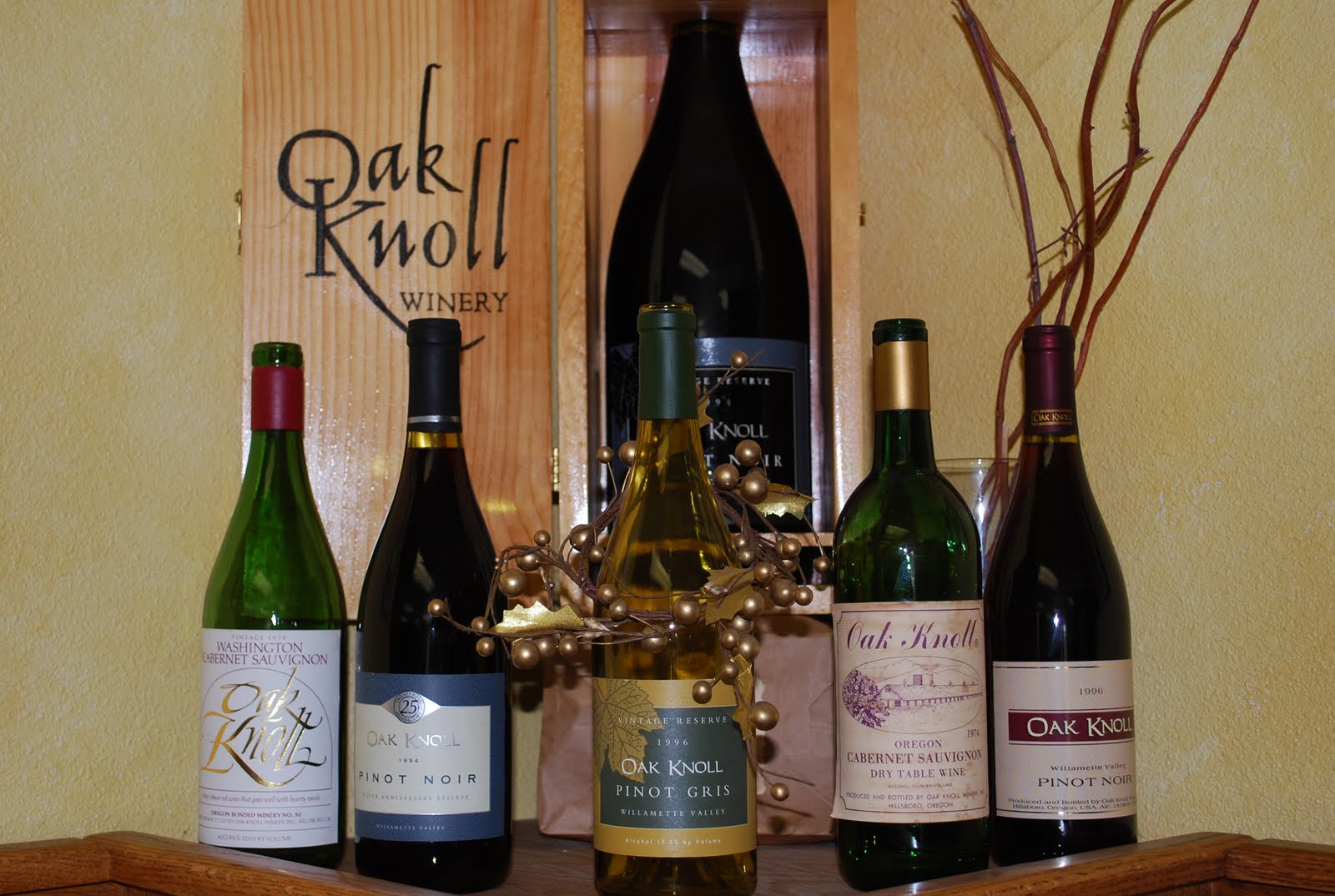
Reflections on a Glass of Oak Knoll

Driving the Oregon countryside on the weekends has far and away become one of my most favorite times for quiet contemplation, so, before I even began my wine tasting at Oak Knoll, one of Oregon’s oldest producers, I sat down at a cozy little cocktail table to download a bunch of thoughts accumulating in my brain before they flew away with the speed of a hummingbird (because that’s how quickly I forget things lately). The lovely Nadine came out from her post behind the wine bar to deliver me an extensive wine menu, providing me with tableside service while she talked me through their selections. In a nutshell… down-to-earth, gracious and friendly hospitality.

Oak Knoll Winery, founded in 1970 by Ron and Marjorie Vuylsteke, was the very first winery in Washington County. The Vuylstekes started their foray into winemaking back in the early 60’s after a bumper crop of blackberries led to the production of blackberry wines. A few years later, they were securing contracts with early regional grape growers and founded some of Oregon’s first wines, and by 1978, one out of every three bottles of Oregon wine sold was from Oak Knoll Winery. Today, the wines are crafted by the Vuylsteke's cousin, Jeff Herinckx, who joined the winery in 1984.

Their wines were certainly more respectable than I had honestly ever given them credit for. I never realized (or admitted?) how susceptible I was, but I kind of had it drilled into my head, from back in the day when I earned a paycheck from a certain winery, that a certain county’s wineries were basically subpar (with the exception of one, of course). That being said, I wish I could have actually tasted the wines blind, because as much as one’s surroundings can affect how the wine tastes, so can one’s personal experiences (in this case I was seriously trying to overcome a negative impression)—and can you ever really obtain an objective impression of a wine?

One of the wines I truly enjoyed was Oak Knoll’s 2007 Pinot Gris ($14). With a nice, rich and creamy mouth feel, the wine made it’s entrance with the typical apple and pear you’d expect at the surface, but underneath I detected entrancing layers of melon and tropical star fruit notes while the mouth offered additional exotic flavors of grapefruit, mango and a spicy, zingy ginger finish; it was a delicious, intriguing and complex white wine, great for summer with a nice acidity and a moderate price point.

Another stand-out wine was the 2005 Pinot Noir Vintage Reserve ($29). It’s light ruby color tinged slightly brown hinted at a touch of age opened up as slowly and surely as a hare in a race to reveal surprising depth and unexpected characters of leather, sweet red cherries, ripe juicy strawberries, violets and an intriguing spicebox finish of spicy clove and sexy cinnamon—ooo la la.

While meandering about outside, soaking up a bit of spring's welcome but early sunny offering, I savored a bite of dark chocolate with Oak Knoll’s 2006 Columbia Valley Cabernet Sauvignon, which was all dark fruit and pepper in a glass, and thought long and hard about my own predilection for the unpretentious that often directly competes with an equal desire for high quality; it’s not easy to achieve both, yet Oak Knoll continually strives to do so and that’s probably why they continue to remain such major players in this wild game of Winopoly. Until we sip again…

Cheers!

Monday, March 22, 2010

Tri-fectas and Cabernet… in Oregon

The first day of Spring brought with it cornflower blue skies and temperatures pushing 70 degrees… not exactly Portland weather, but welcome like a long lost friend. I arrived at Solena Grand Cru Estate Winery eager to taste their vertical of Cabernets (vintages 2003-2006). I’d previously tasted at Solena’s downtown Carlton location, but since then, they’ve opened their brand new estate winery, located on 80 acres in Yamhill, Oregon. The desire to visit their new location, a special tasting of Cabernets in the vast land of Pinot noir and getting out to enjoy the amazing weather made for an irresistible tri-fecta.

Emily Stoller-Smith (wife of Dundee Bistro Executive Chef extraoridinaire Jason Stoller-Smith) had an unexpectedly large turn-out for their Cabernet Sauvignon vertical tasting, but she handled it with grace, wit and style when she asked if any guests had their OLCC card and invited them behind the counter to pour. I felt inclined to do so… for a fleeting moment. Then I remembered I already work for nothing (except the pleasure writing my blog and hope that I’m entertaining my readers) and decided one unpaid job was quite enough.

Emily started off my tasting with a 2008 Pinot Gris. I took my glass outside to the peaceful deck overlooking the young vines and solar panels because nothing invites a glass of good white wine like the warmth of the sun’s rays. The day was a perfect pairing with my wine, which was almost equally perfect. The Pinot Gris was bone dry with intense aromatics of Asian pear, white flowers, starfruit and a delightful minerality, which added both body and character. I sat alone on the deck, tasting my wine while quietly absorbing my surroundings. To be completely honest, all I really wanted to do was buy a bottle, grab my sweetie and hold up with a picnic and some witty conversation while we lied in each other's arms soaking up the dreamy sunshine.

I returned to the company of the bar to start my Cabernet tasting and was slightly disappointed when one glass of 2003 was set out before me. I know it’s an obscene amount of glassware, but if you’re going to offer a tasting of four consecutive vintages, you should be able to revisit the wines for comparison of color, clarity, viscosity, and taste them all side by side; just my opinion. Here’s my impression of the wine (which by the way were being offered for sale as a collection for less than $100—screaming deal):

2003 Klipsun Vineyard Cabernet Sauvignon — A sweet and fragrant nose of blackberries, root beer, violets, tobacco and mint. The distinctive peppery finish was long and smooth. Well structured with a nice, dark garnet color and medium-heavy weight viscosity.

2004 Klipsun Vineyard Cabernet Sauvignon — Same black fruit core and same white peppery finish as the 2003, with firmer tannins, a big bite of dusty earth, licorice and savory cured meat.

2005 Klipsun Vineyard Cabernet Sauvignon — My favorite of the line-up, and probably because it was the most Pinot-like. It was silky and well balanced with a full nose of blackberry, mocha, violet and licorice that carried through on in the palate. I thought this wine was so good I even brought a bottle to take to dinner at my friend Todd's (who's also a fellow blogger and Pinot connoisseur). I hope it's as good as I remember!

2006 Klipsun Vineyard Cabernet Sauvignon — Still young tasting and very fruit-forward, thrusting wild raspberries in your face (compared with the black fruit core of the three prior vintages). The nose was soft, the tannins light and I just didn’t see a whole lot of complexity in this wine.

I was slightly amused when I sat down to take some notes and glanced at the guestbook next to me; the first name was Kevin Bacon with his email address, followed by George Clooney, of course. I think someone had a little too much Cabernet that day.

Witnessing me take notes with an old-fashioned pen and notepad, a conversation with a guest ensued about his helpful iPhone application for tasting notes. The world continues to get more high-tech and I struggle to keep up, yet I rest assured knowing there will at least never be an app for making wine. That’s one thing that will thankfully remain a form of art—an individual, beautiful and creative expression of fruit. Until we sip again…

Cheers!

Sunday, March 14, 2010

Superheroes, World Domination and Oregon Wine

When the Gaston Six gather together in one spot to pimp their goods, it’s surely an event you don’t want to miss. Like local Superheroes, picture an opportunity to taste wines made by true independent winemakers—ADEA, Biggio Hamina, Bishop Creek, Cancilla Cellars, Matello and Twelve—and you begin to wrap your head around the rare and unique artisan wines I sampled that day.

Showing respect for the house, I started first with the host, ADEA Wine Company. Founders, Dean and Ann Fisher produced their first three vintages (starting in 1995) under a different name, and in 1998 they changed their name to ADEA incorporating the first letter of each family member’s name (Ann, Dean, Erica and Adam). Their earliest vintages were crafted at Medici and later at Lemelson, but ADEA now proudly has their own winery (which additionally houses a collection of boutique indie winemakers) and a tasting room open on weekends.

I was poured a delightful 2005 Rose, crisp and tart with rhubarb and strawberries, and the perfect beginning to the wine journey dubbed Pinot Passion. I also truly enjoyed ADEA’s 2006 Momtazi Pinot Noir—deep, dark and brooding, with black cherries and pie spice finish… reminiscent of a late night diner after a rock concert.

Taking two steps to the left, I easily located Biggio Hamina, where I chatted with owner Todd Hamina who just turned out his 14th vintage. He told me how the name is a combination of his last name and his wife’s maiden name (are we seeing a trend developing?). While I was savoring the incredible aromatics on his wine, he humbly stated how “making a good Pinot Noir is akin to bragging about being the tallest midget.” Well, Todd, I don’t know about that midget thing, but you certainly have something to boast about. The 2007 Deux Vert Pinot Noir had a beautifully light and almost translucent color, a floral nose with lush red cherries and a hint of underlying earthiness; it was every bit balanced with fruit, lively acids and velvety tannins… flawless.

At Bishop Creek Cellars, the wines and vines are managed by one person, Jeremy Saville. The 60-acre site (originally planted in 1988) is located in a cooler micro-climate than many Willamette Valley vineyards, which Jeremy thinks results in later ripening fruit that gives the wine its distinctive and intense flavors while retaining the natural acidity. I admired Jeremy’s approach and his wines seemed to truly reflect his philosophy. Bishop Creek produces only estate-grown wines from their 13-acres of Pinot noir, Pinot gris and Pinot blanc. With Syrah, Arneis and Gruner Veltliner planted to vine in 2008, I’d keep my eye on what they’re turning out in the next few years.

Jeremy was pouring the best white in the house that day (IMVHO)—a 2007 Pinot Gris, 100% stainless-steel fermented and 100% true-to-varietal flavor. It had depth and character with an intense nose of Anjou pear and green apple, a delightful nuttiness (probably resulting from ripe grape seeds) and energetic acids that filled my mouth. The 2007 Barrel Selection Pinot Noir also spoke volumes to me. It was a delicate, light ruby color, yet incredibly complex and well integrated with layers of cranberry, pomegranate and rose (and at $22, it’s a very reasonable indulgence and one I would like to have speak to me again).

Next in the procession was Matello winemaker (or Masseur du Raisins as he whimsically calls himself) Marcus Goodfellow pouring his wine of choice… a 2007 Pinot Noir Souris. This cuvee (barrel blend), though not my favorite, was an excellent and very thought-provoking wine; it was acid-driven with red cherries, strawberries, rose petals, cured beef and spice. As I chatted with Marcus, the wine continued to open up showing how marvelously multifaceted it really was. By contrast, the 2008 Pinot Noir Hommage a’A&D was tight and grippy, but I think it was just in a shut-down phase (this sometimes occurs after bottling). With more time in bottle, this wine could turn out to be a gem and would be an interesting wine to revisit in the future. My favorite of Marcus’s wines was the 2008 Winter’s Hill… it was fruit-forward with silky tannins and hints of smoke and tobacco. When I asked Marcus about his label, he first explained the name Matello comes from the Italian for little fool. He chose the Court Jester graphic because in the old days, the jesters were the only person who could really speak their mind. I think he just might be something of a jokester himself, identifying with their playful nature. Matello is producing less than 1,600 cases per year, and as a testament to their “indie” ways, does not even have a website. (Need some help with that? I know some great peeps!)

Moving on down the line: Ken Cancilla escaped from the East Coast and the Telecommunication world to grow grapes in Oregon. Nine vintages later and he’s still living the dream; Ken has 23 acres planted in Gaston (22 to Pinot Noir and 1 to Chardonnay) and crafts his wines using only his estate fruit. Cancilla Cellar’s 2007 Chardonnay displayed bright citrus, soap and a minerality much like steeliness (despite being aged in neutral oak). It was racy, zippy and surely got my attention. The 2006 Pinot Noir showed a lot of red fruit like raspberries, strawberries, red cherries, as well as earth and some sweet, hot (almost port-like) cassis.

My last stop on my tour of the Gaston Six brought me to Twelve. Twelve is a family-owned 13-acre vineyard located four-miles west of Carlton. When I asked owner John Lenyo about the choice of name, he said it came from the movie Spinal Tap (I believe it’s a quote from Nigel Tufnel where he asks, “Will this one go to eleven?”). Twelve’s labels are always changing, but one thing remains consistent about them; they’re all beautiful examples of modern art. John was smart about engaging his consumer and making them think before he even gets a drop of wine into their glass. I might brand the term “intelligent seduction”; clever marketing that draws you in with its mystery. What does Twelve mean? What is this label? Why 144? The 2007 Reserve 144 refers not to a specific clone, but is in fact, their name (12) to the power of 12. And their second label (lower price point wine) is called Second Floor. Got something against thirteen? Whoa, too many numbers for me—I’m outta here!

I casually, and more in jest, refer to these artisan producers as Superheroes. Okay, calling them Superheroes might be a bit of stretch, they’re not fighting evil villains plotting world domination. But they are putting themselves out there every day battling the forces of nature, the environment, the economy, government and big business… all for the sake of wine. That’s dedication. So next time you’re pouring yourself a glass at the end of a long day, take a moment to think about what kind of passionate individual (hero) it took to get that wine there and make a quiet toast to them. Until we sip again…

Cheers!

Sunday, December 13, 2009

Is Your Glass Always Half-Full?

When one thinks of Salem, Oregon, wineries and vineyards are probably not some of the first images that come to mind. But, at the southern end of the Willamette Valley, just beyond the boundaries of Oregon’s capital city of Salem, lies the Eola-Amity AVA (American Viticultural Area) that includes a vast array of wineries both unique in taste and experience.

Visit Redhawk Vineyard and Winery, but be prepared, you might feel like staying a while… heck, you might just even move in. At least that’s how it went for Jude, who popped into Redhawk while on vacation from California three years ago and has since been “adopted” by the family, working in the winery and pouring in the tasting room. As it turns out, she’s also my mystery fire-starting goddess, lighting fires and rescuing her neighboring winery’s guests from the unfriendly cold (I ran into her on a previous day’s adventure at Mystic—click to read the post).

In 2005 John and Betty Pataccoli purchased Redhawk Vineyard and Winery lock, stock and wine barrel. Though the place was pretty rundown, the Pataccolis made significant upgrades to the winery, cellar/tasting room and vineyards and Redhawk is now producing quality wine they aim to sell at reasonable prices. John and Betty created a place for guests to sip wine while regarding the mountain and valley views from the huge floor-to-ceiling windows.

While Max the Dog gravitated between lounging like a king on this throne and roaming the cellar in search of sausage handouts, I enjoyed the wines in the entertaining company of Jude and John. Redhawk crafts a lighter style Pinot noir called “Grateful Red,” which was originally conceived by the ex-hippies who founded the place. The wine had such a cult following that John kept it around—which turned out to be a smart decision, as that wine now accounts for half of his production. When John bought the farm (so to speak), with it, he inherited 14 barrels of Cabernet Sauvignon, Merlot, Cabernet Franc and Pinot noir. In a lucky twist of fate (and almost by accident), he expertly blended them to create a big, flavorful and affordable table wine (which he’s also kept around) called Redhawk Red ($12).

My favorite wines however, were the 2007 Pataccoli Family Vineyard Pinot Noir and the 2008 Syrah Columbia Valley; the Pinot was loaded down with red cherries and raspberries striking a sweet spot on my tongue while the toasty Syrah warmed me up from the inside out with blackberries, cassis, spicy peppercorn and hints of anise. The finish on the Syrah lingered long and heavy, like an old fogies’ stogie, I still had a full itinerary, so I bid my farewells and headed off for Evasham Wood.

On the way to my car, I paused to absorb the views of the vineyards and scenic valley below where I met a Redhawk employee who told me about a secret trail through the strand of tall fir trees adjacent to the residence which led directly to Evasham Wood, right next door. He mentioned that it’s quicker to walk there then to drive but the drive up through their vineyards is lovely, so sold on the notion of that experience, I returned to my car.

Funny thing about timing—while driving up past the fields of flowing golden grasses lined with stately old Oregon white oak trees, stretches of blackberry bramble and on through Evasham Wood’s 13-acres of organically farmed vineyards, I paused a few minutes to snap a photo. Almost immediately as I resumed driving however, I passed my old boss Jason Ludlow (from Cooper Mountain Vineyards) coming down. Had I walked what was probably a very lovely trail through that cluster of fir trees between the wineries, I would have arrived just in time to bump right into him, which may have been a bit awkward for both of us. Sadly, our professional relationship fell apart when I started this project and discovered he didn’t think regular, uncredentialed people such as myself (non sommeliers) should be writing about wine and didn’t support “wine blogging” in general (not that he ever even bothered to look at my blog). So, apparently with the timing fairy sitting pretty on my shoulder that day, I found myself able to enjoy the wines at Evasham Wood Vineyard in their cozy, sub-terreanian wine cellar after all.

Evasham Wood Vineyard is only open for guests to taste two times per year, and as luck (or good planning) would have it, I happened in for their Fall Open House. The packed cellar was brimming and bustling like an evening cocktail party with guests mingling over wine and platters of catered food (which also made it difficult for owner and winemaker Russ Raney to answer my questions).

Russ produces 5500 cases a year, aspiring to craft wines that are true to both their varietal and the location… terrior. Russ poured a 2008 Blanc du Puit Sec that was 80% Pinot Gris and 20% Gewurztraminer which I thought showed interesting notes of Meyer lemon and candied ginger. The 2007 Pinot Noir Le Puits Sec, all from estate fruit, was his golden child though—well structured, with great balance and good acids. More complex than a cocktail wine, it was clearly built for food pairing (as classic Burgundies are). I hung onto my glass of wine for a while… swirling it, sniffing it, letting it open up so I could explore the many layers which kept unfolding to expose plums, raspberries, earthy truffles and leather, floral rose petals and a spicy white pepper finish. After tasting through the wines, I left the Evasham Wood’s country estate cellar and escaped to the nearby cultural retreat of Cubanisimo.

Step into Cubanisimo Vineyards and you might think you’ve landed in a Cuban café. The tasting room is rich in Cuban flavor with bright art contrasted by dark wood overhead, banana-leaf ceiling fans, plantain chips on the bar, tropically-inspired patio and of course, Fidel Castro toilet paper. The owner and founder, Maurice Collado Jr., who was born in Havana and lived with a winemaking family while in college, has ultimately combined his pride in his heritage with a passion for great Pinots. He commissioned Robert Stuart (of R. Stuart wines) to craft his portfolio, which included a charming 2008 Rosado de Pinot Noir that at first sniff was bright and floral with essences of green melon and apricot breaking through and an appealing mouth of succulent white peaches. I was intrigued by Cubanisimo’s 2008 Pinot Gris, which grabbed my attention with its combination of subtle honey and white flowers that stood up against the strong backbone of zesty citrus, Anjou pear and tart green apple.

In my research, I learned the meaning of the word Cuba roughly translates to “where fertile land is abundant” or “a great place” from the indigenous Taino language. With 12-acres of vineyards just planted in 2003, I’m sure Maurice is just beginning to understand how fitting his name choice probably is.

The Eola-Amity region is a far different experience than the crowded and oft-visited Dundee Hills. The wineries are very unpretentious, and if you’re a first time taster, wineries like these provide a less intimidating atmosphere. While at Cubanisimo, I got to enjoy witnessing a gentleman’s first foray into wine tasting. Tasting Room Associate Heather masterly handled him, and though the guest was somewhat resistant, she was gently persuasive and even had him drinking pink wine—I might add that he appeared to be enjoying it too! Well done Heather.

Every once in a while, my experiences on this journey take me beyond wine and I discover something different and truly special. Pop ‘round to the unassuming Orchard Heights Winery on a Sunday for brunch and be prepared for a feast! Start the day with made-to-order omlettes and pasta bar, Belgium waffles, biscuits and gravy or eggs benedict. If the weather’s nice, take advantage of a choice of scenic vistas from either the front deck or back patio. Even if you miss brunch, like I did, Orchard Heights features a large gift shop with an extensive selection of snacks to make lunch from, including macadamia nuts and chocolate from the owners Michael and Gwen Purdy’s farm and factory in Hawaii (where they live half-time).

Orchard Heights was offering a selection of 15 wines to choose from—that’s a lot of tasting and spitting. While I was doing this, a brunch staff member happened through and was astonished I was spitting the wines out, as she had never seen that done before. Really? She works at a winery and has never seen someone who tastes but doesn’t drink? I might have looked as astonished as she did. Keeping with the island theme—and in addition to the winery’s Pinot gris, Pinot noir, Gewurztraminer, Riesling, Cabernet, Merlot and Syrah—Orchard Heights makes their specialty Island Princess wines, which is their dry white wine base with Hawaiian tropical fruit purees added that were unique, exotic and distinctive, especially in this Valley of Pinot noir.

While I was considering how many glasses of wine I have poured for me in a day of tasting, it occurred to me what a lucky woman I really am. But to be honest, I was having one of those days, which is probably hard to imagine when my job is to be out touring Oregon’s amazing wine country, right? Contrary to popular belief though, purposeful wine tasting, as I’m doing it, is more work at this point than it is a good time. So, feeling perhaps a bit philosophical too, I began thinking about how others view my world as well as their own. And at the end of a long day, I wonder how many been have looking at their glass throughout the day with the good fortune of having it always be half full. So what ‘s the lesson here? You tell me. Until we sip again…

Cheers!

Friday, November 27, 2009

Gas and Wine Fill My Day in Oregon's Wine Country

With over 400 wineries in Oregon alone, when planning a trip, how does one go about deciding which to visit? You could listen to friend’s recommendations, consult wine experts or research travel sources. Marketing professionals spend millions of dollars and countless hours trying to understand this decision-making process. The hidden component they can’t factor into their marketing plan is people’s personal experience. Often times decisions are made purely by instinct… you select a certain winery because the name or label struck you in some way… it was odd, it reminded you of your sweet grandmother, it shared the same name as your favorite song or you were drawn to their icon/mascot/symbol. For some reason (beyond wine), you identify with the brand on some level, and that’s why you visit. For me, Stone Wolf Vineyards was such a place.

I’d seen their bottles on the supermarket shelves… I call them “Value Vino”—wines priced to move and drink fast rather than cellar and savor. One look at the magnificent solitary wolf on Stone Wolf’s label though and I’m lured… those eyes. Frozen mid-stride, my heart is flooded with memories of my beloved wolf-dog Shasta… I could be staring into her bright, golden eyes. The wines could have been expensive water and I probably would have still bought them. My motivation had nothing to do with wine but was all about memory and feelings. I carried that notion of emotion with me as I set out for a big day of tasting.

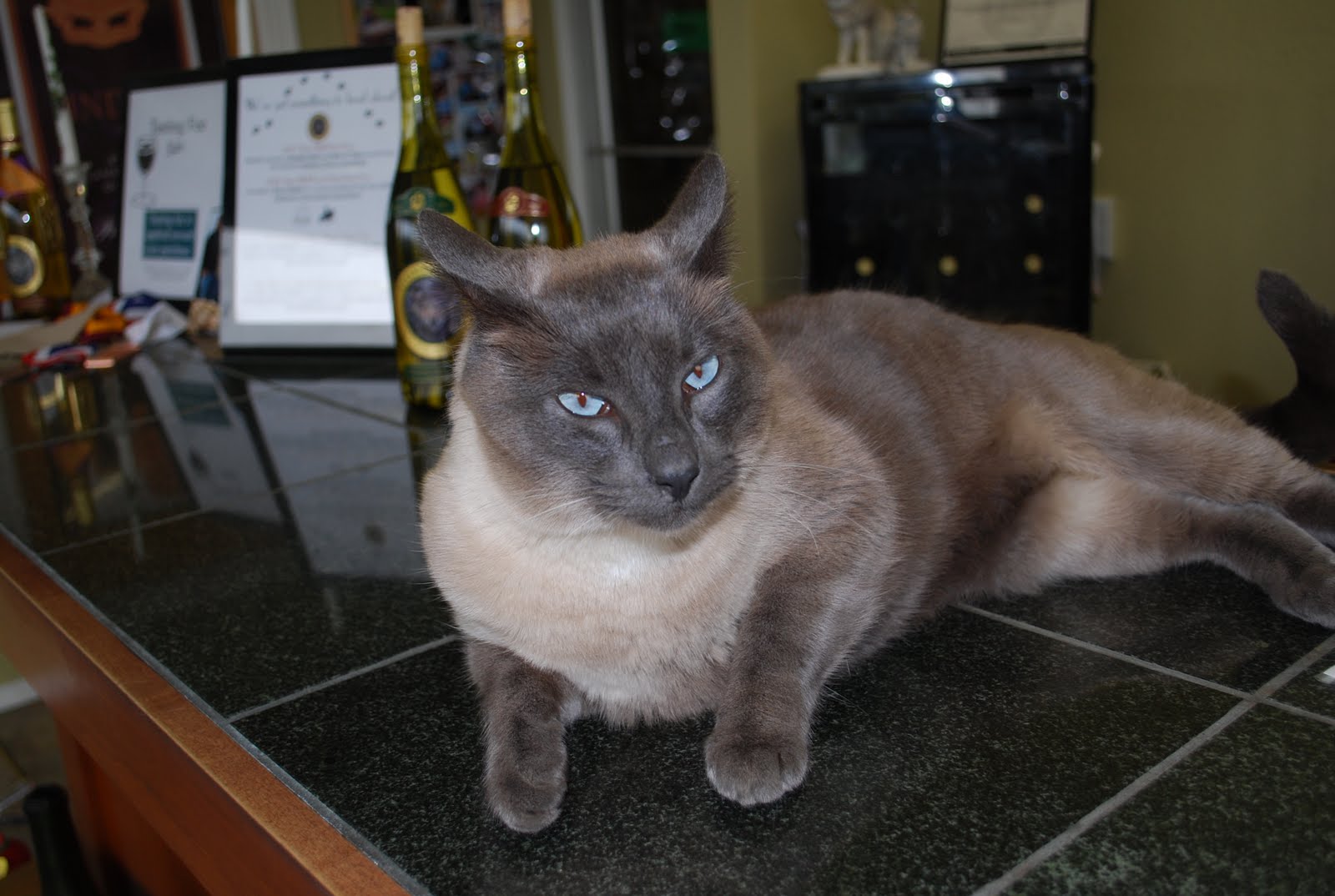
From the moment I pulled into Stone Wolf’s parking lot in McMinnville’s industrial district, you know I had wolf-dogs on the brain—but Frank the cat had other ideas. Frank popped out, as if he had been waiting all morning for me, and started rolling around provocatively at my feet, purring and demanding my attention. After a thorough rub down, Frank and I walked together to the tasting room where I noticed the sign “Winery Cat on Duty” on the door and asked if he could come in with me (all the while he’s looking at me saying, “as if”).

Naturally, Frank hung out with me at (or should I say on) the bar while I tasted, but you won’t hear me complaining about having such a handsome man hanging all over me either. Other than Frank, the only people serving guests in the tasting room are members of the winemaking team and so you’ll find they possess extensive knowledge about their wines. On the down side however, with the team busy during harvest, Stone Wolf closes their doors to visitors for this time. Arriving just after their season’s harvest wrapped up, the tasting room was ready to greet guests and though the little gas stove was pumping heat, the room still had quite a chill to the air.

Linda and Art Lindsay planted their first vines at the 40-acre Lindsay Estate (situated at the base of the Oregon Coast Range west of McMinnville) and began producing Stonewolf wines in 1996. They produce un-complicated, everyday, food-friendly wines that don’t require a celebration to open. An example of their value-driven wine is the 2006 Chardonnay; priced at $13.00. Slightly oaked, with tart citrus, dried white flowers and impressions of vanilla, the wine (even at eleven a.m.) was a straight shooting sipper… and if the weather were warmer, I probably would have bought a case. The 2006 Pinot Noir Legend Reserve was presented with a lovely wax seal (somewhat of a dying art). Linda taught me an important lesson that you don’t need to try to cut or remove the wax before inserting the corkscrew. She says if the winery has done their job correctly, the cork should pull right through… I look forward to trying that. The wine was a luscious ruby color with black cherries, wild raspberries and though the flavors were pretty well integrated, with no one element particularly jumping out, I could discern some rose petals and autumn leaves as well.

The Lindsay’s produce a luxury tier called, appropriately enough, Lindsay, which displays their family crest as its logo. Having a rare opportunity to taste something from the well-received 2002 vintage, I enjoyed the Lindsay 2002 Angus Pinot Noir and as it filled my whole mouth with ripe black plums and black cherries, it left a lovely peppery spice behind. The tannins were soft, the acids were vivid, and the wine still had a solid fruit presence which was screaming, “Drink me!” All the while, Frank was screaming, “pet me” and though I happily indulged in kitty time, I still had wolf-dogs on the brain when I pulled away.

I revisited Anthony Dell Cellars (who was wide open for business with their neon sign telling me so) in the old granary building also housing R. Stuart’s winemaking facility; where a lively weekend marketplace was also taking place in the parking lot (a good draw for the winery). Douglass Anthony Drawbond and Joy Dell Means are the middle names behind the boutique brand (and everything else behind the bottle as well). Producing less than 1,000 cases, Joys says Anthony Dell’s admittedly nuts to think they can do it all—a true Mom-and-Pop operation striving to make wines they like to drink… and liking variety, they produce six wines with fruit from both their Estate and the Del Rio Vineyards in southern Oregon.

Joy poured me three vintages of Pinot noir, 2005-2007 (a fun little mini-vertical tasting), with each possessing different amounts and varying degrees of black cherry, earth and spice flavors. A delightful treat was the 2005 Rio Red, a blend of Cabernet Sauvignon, Merlot and Cabernet Franc that was like a tall, dark and handsome stranger—deep, mysterious and exotic. The wine had a pleasing nose of blueberries and mocha that carried through on the palate where a bit of juniper berry hit my tongue.

Anthony Dell has moved away from the whimsical label they originally developed to the more traditional label they are now using; which is quite serious by contrast but apparently better received by the market. The winery has kept their fun tagline—which is actually a derivative of an old saying from The Fabulous Furry Freak Brothers comic—“Wine will get you through times of no money better than money will get you through times of no wine.” Though harking back to my college days, I seem to recall that expression using a different four-letter word starting with the letter “w”… but wine works well too.

I left the hubbub of McMinnville’s “Urban Wine Tour” and ventured out into the wild blue yonder of Yamhill Valley. I drove up the narrow road stretching out past the 21-acres of organic vineyard in the coastal foothills up to the quaint, romantic and picturesque Youngberg Hill Vineyards and Inn. Positioned high atop the hill, Youngberg Hill has views like no other; and with a wrap-around veranda and an expansive lawn overlooking the sweeping vineyard and valley views (with panoramic views of Mt. Hood, Mt. Jefferson the Cascades and even the Sisters on a clear day… but not today), it’s one of the most beautiful and memorable spots for a special event I’ve ever witnessed.

Youngberg Hill functions both as an Inn with luxuriously appointed rooms and a winery with a tasting room located within the Inn. I felt a bit like an intruder though, it was perfectly quiet and no guests were around—perhaps it was the quiet I felt like I was intruding on. A very nice young woman patiently poured me through the wines, and opening bottles just for me, I was fairly certain they hadn’t seen many tasters coming through that day. Completely booked through the busy summer wedding season and then harvest, I’m certain it was a welcome calm.

Two wines stood out for me; the 2006 Natasha Block Pinot Noir was like a dessert of cherry-rhubarb pie. There were lovely highlights of white pepper, leather and tobacco. The 2006 Jordan Block Pinot Noir was more fruit-forward pouring forth with blackberries and plums. Look deeper for accents of flowers, truffles, baking chocolate and peppercorns and understand what makes Pinot noir so beautifully captivating and hypnotic. The wines and the setting truly make Youngberg Hill Vineyards a place to enjoy—but to properly experience the whole package, I was thinking perhaps a longer stay was in order. But it wouldn’t be now, because I had both other wineries to visit and like Anthony Bourdain… no reservation.

Don’t expect a drive through McMinnville’s countryside seeking out adventures in wine tasting to be anything like Napa. There aren’t miles of sprawling vineyards; instead, the wineries are miles apart dotting the hillsides with occasional stretches of grapevines and sharing the land with sheep, cows and alpaca farms, like the one directly across from Maysara Winery.

In 1997, the Momtazi family purchased 532 acres of abandoned wheat farm and transformed it into the splendor it is today. Momtazi Vineyard is the largest organic and biodynamically farmed vineyard in the Northwest, with over 200 acres planted in the McMinnville AVA. Maysara means “House of Wine” in Farsi, honoring the family’s Persian heritage. The winery is tucked away in a nest of enormous trees and looks out over the beginning of the steep sloping vineyard estate and a pristine eight-acre reservoir fed by natural springs and irrigation that is healthy and clean enough to provide a home for even fussy rainbow trout. Being environmentally conscious, Maysara has moved away from traditional cork closures using the Stelvin (or screwcap) closure on all their wines instead.

The upstairs tasting area is informal and personal, with guests seated at the round table amidst Persian art and tapestries, alongside a family member who introduces the wines. It was very comfortable with an additional cozy seating area offering a view of the barrel room. I felt like a welcome guest in their home while Naseem poured the family’s wine, which were all so impressive, how do I narrow down my recommendations? Final decision: Two wines with two very distinct personalities. The Jamsheed 2007 is Maysara’s most widely produced wine, named for the Persian king of the same name. It’s a blend of every section of every block of the vineyard and is extremely fruit-forward with a palette of flavor… sweet raspberries, red cherries, tart cranberries, black plums and currants, beyond which lay an oasis of sweet cocoa, smoke and pepper providing interest and intrigue. The Delara 2006 was a profound wine with a lot to say. One sip and it was able to communicate a poem of dark ruby color, a symphony of fruit flavors: blueberry, blackberry, black plum and cherry and a Broadway production where Act 1 is the dark chocolate, followed by Act 2, coriander and anise spice and Act 3 finishing strong with an espresso finale. Delara is another Farsi word meaning “To capture one’s heart”, which couldn’t be a better descriptor for this complex and captivating wine.

Driving out of Maysara, with the needle of my gas tank hovering dangerously around the E, I realized I had forgotten to fill my gas tank before setting off for the long and winding back roads of McMinnville and could just picture myself running out of gas in the middle of no where. Heading back towards town, and the nearest gas station, I passed Yamhill Valley Vineyards along the way, and being located right off the road, I knew I just had to stop.

Yamhill Valley Vineyards was founded in 1983 by the Burger family and is producing 100% estate-grown wines from their 100 acres of vineyards nestled in the rolling foothills of Oregon’s Coast Range. Their label features the colorful Western Meadowlark, which I embarrassingly learned is the state’s official bird. Their wines are made by Stephen Cary; but the Burger family is running the rest of the show. One of the children, Laura, who works in the tasting room, was home from college and had just worked her first Crush. Many of the area wineries partner with wineries in other countries bringing harvest workers across international lines to help bring in the vintage but Yamhill Valley Vineyards has taken that one step further. Laura told me about Kami, a Sherpa who has been coming to them for years from Mt. Everest to work harvest. Oh the stories he must be brimming with… can you imagine sharing a bottle of wine with him?

Laura shared her wines with me in the country-casual tasting room and though the whites were of interest, at $20 a bottle, the 2007 Pinot Noir Estate was a drinker. The wine showed quite a bit of oak up front with a solid smokiness and was somewhat alcoholic with cassis, black cherries and light pepper. It was easy to drink, had attractive features and good structure—I think I enjoyed it because it told me a story I could follow… from beginning to end. It was a quiet day in the Valley that day, and I think I may have been the first guest, at the end of the day. I really wanted to taste the 2006 Tall Poppy Pinot Noir ($80 retail), but the bottle was closed and I couldn’t ask Laura to open it up just so I could have a taste. It’s just a great reason to go back.

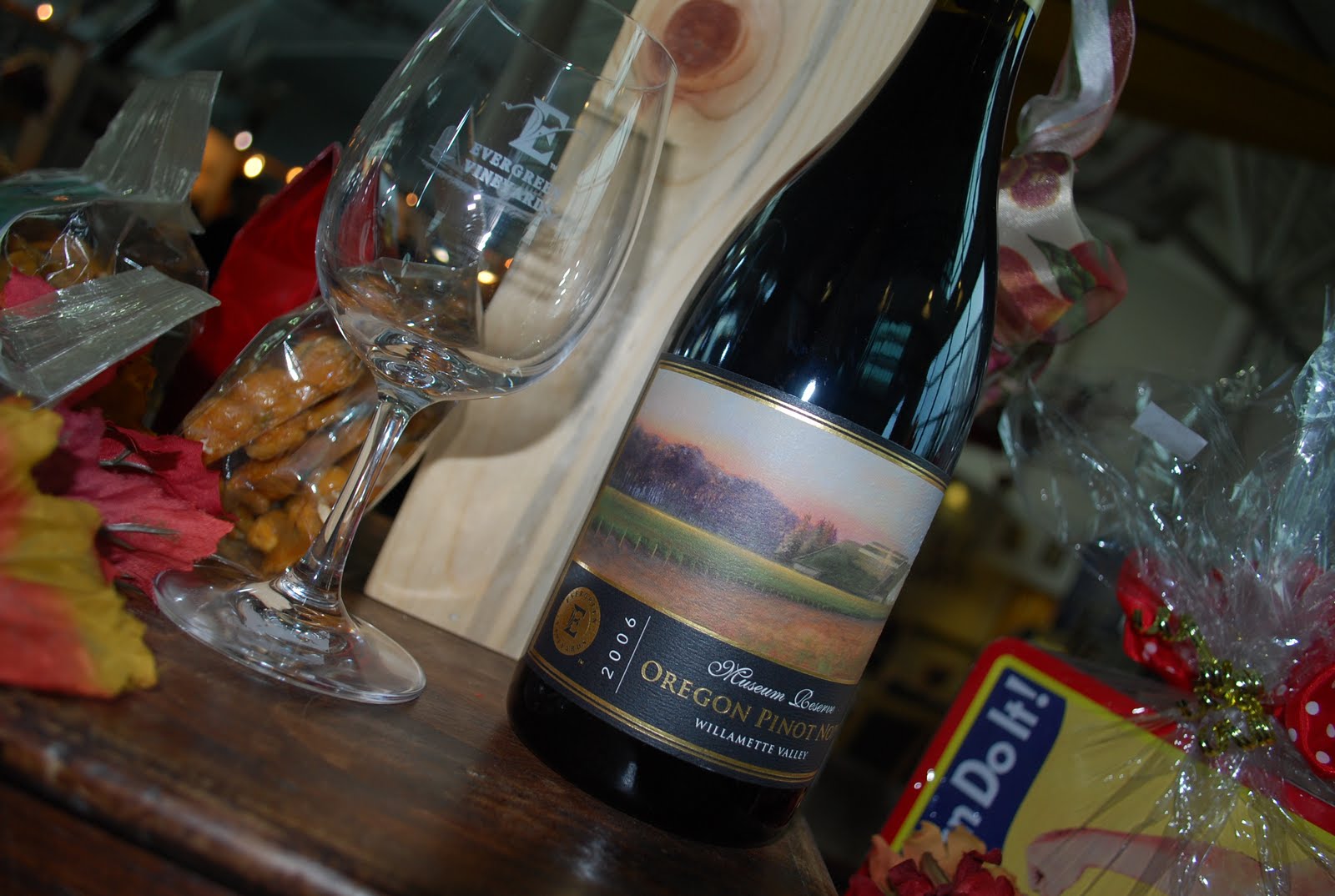
Heading towards Portland, I came upon the Evergreen Aviation and Space Museum campus. The Boeing 747 parked out front was a glimmering beacon in the setting sun, and as if Ground Control was guiding my private jet to the gate, I turned in at the vineyards and followed the runway to the Museum housing the famous Spruce Goose and the Evergreen Vineyards tasting room. A fascinating scene for sipping wine, next to civilian and military aircraft on display and suspended mid-air, the tasting room was like a central hub for guests. The tasting room also sells snacks and gifts, some of which have been produced by one of the company’s side ventures. Founded by Captain Michael Smith of Evergreen Aviation, the extremely diversified company also owns Evergreen Agricultural Enterprises; consisting of Evergreen Vineyards, Evergreen Orchards (the largest grower of hazelnuts in the state), Evergreen Nursery and Evergreen Farms and Livestock.

The wines were surprisingly good for a tasting room located in a… gulp… (trying to say in my most un-offensive voice) tourist trap, but not so surprising when I found out they’re made by Laurent Montalieu (of Solena Cellars) at the NW Wine Company in McMinnville. The 2005 Spruce Goose Pinot Gris had quite a flashy personality for an older girl (many of the area wineries are showing their 2008 whites). Still bright and clean, the beautiful soothing nose of honey and chamomile was delightful and when I sipped it, the wine was lively and playful in my mouth tasting of Now and Later green apple candy, Anjou pear and muskmelon. Another wine that didn’t fly under my radar was the 2006 Spruce Goose Reserve Pinot Noir. With flavors of sweet blackberry jam and Rainier cherries and streaks of nutmeg, vanilla and pepper running through; the wine definitely possessed some intrigue.

Wishing I could just fly home, I returned to my car, and the still empty gas tank. Realizing I was still quite far from civilization, I hoped I would reach the gas station before my lesson of the day became all too painful. Yes, I learned that being un-necessarily stressed out about running out of gas is not the way to tour wine country. Like the view from your car’s side-view mirrors, things are often farther than they appear and it’s actually quite easy to get turned around. So, start out with a full tank and feel good about getting lost in wine country. Until we sip again…

Cheers!

Tuesday, October 13, 2009

Work a Day in My Vineyard…

I headed off towards downtown Carlton again for what quickly was becoming my routine weekly wine tasting sojourn and found myself awestruck and emotionally moved by the powerful colors of Fall beginning to strangle out the last life of Summer. The hazelnut trees were shedding their fruit into a veritable carpet of brown nuts in the orchards and the excitement of Harvest was buzzing all around.

My first stop of the day was the six-acre vineyard estate of Carlo & Julian located just on the edge of town. With roosters squawking, an abundance of cats roaming the grounds, a certain wild feeling and a virtually unmarked tasting room in the wine cellar, I wasn’t sure I was in the right place until winemaker and proprietor, Felix Madrid quickly and quietly assured me I was.

Felix invited me into the tasting area located in the cool and dark barrel room whose focal point (besides the oak barrels full of aging wine) was an antique stained glass window recovered from a church in Nova Scotia appropriately decorated with the words “Go work a day in my vineyard”. That window got me thinking: Winemaking seems like such a romantic gig, but until you’ve walked a mile in someone else’s shoes, or worked a day in their vineyard, you really could never understand the blood, sweat and tears that goes into each bottle.


Felix of course grows Pinot Noir, however he is the only vineyard in downtown Carlton growing sophisticated and distinctive Tempranillo, Merlot, Carmeniere and Malbec (in line with his Argentinean heritage); and in this vast sea of Pinot Noir, it was most interesting to explore some other varietals grown in the region. I wondered if thoughts of global warming were motivating Felix to grow some warmer climate varietals, but I’ve heard that Carlton is its own little micro-climate with a pocket of warmer air and I’ve noticed several of the wineries in the area experimenting with red wine varietals other than Pinot noir. One of the things I really liked, and admired, about Carlo & Julian was the simplicity of everything. There was no pretense, no fancy, shmancy granite counters and cherry cabinets… instead it was raw and beautiful and purely about the wine (probably much like the pioneering days of Oregon winemaking when many of the producers tasted out of their garages).

I left Carlo & Julian with a bottle of 2005 Estate Tempranillo and instructions to lay it down for five years, dreaming of the dishes I could pair with it that night… paella, a big bowl of cioppino or a mouth-watering appetizer of figs and goat cheese wrapped in prosciutto.

I went to the opposite side of the quaint little town that seems to revolve around the wine industry (with more wineries per square foot than probably anywhere else, i.e. more tasting rooms than Starbucks and churches, combined!) where I found Cana’s Feast Winery, formerly Cuneo Cellar. Cana’s Feast, though practically in town, has a real country-esque feel with an expansive outdoor patio, well-tended Bocce ball courts, a relaxing view of the Coastal range and the scents of olive and lemon trees, stone pines, and Italian cypresses lingering in the air.

The pièce de résistance is Cana’s Italian Cucina, an indoor/outdoor restaurant serving a seasonally inspired Mediterranean menu. I highly recommend working this restaurant into your tasting schedule. The chef uses all seasonal and local ingredients (mostly from their Estate garden, preparing everything by hand… from bread, pastas and sausages to stocks, chutneys and jams—and it’s all ridiculously reasonably priced. If you plan to visit, dinner is served on Thursday, Friday and Saturdays and lunch on Friday, Saturday and Sundays.

The wines were rich and bold, pairing well with their hearty Italian food. I had a 2006 Bricco Pinot Noir with nice, bright red fruit, a good strong backbone and nice supple tannins and five other Bricco wines (also good), all sourced from eastern Washington and southern Oregon. Now that I think about it, I don’t think I even tasted the Canas Feast wines. The name Canas Feast refers to the biblical story of the wedding feast where Jesus turns water into wine. A point I tried to look past as I’ve never really been particularly fond of having religion poured down my throat in any capacity, especially not in the form of wine. There seems to be a bit of confusion on what to call the wines. They used to be Cuneo, then they switched to Canas Feast with a lower-priced tier called Bricco, which they are also now dropping and putting all their wines under the Canas Feast label. Did you follow that? Yes, I agree, one label sounds a lot less confusing.

Located adjacent to Canas Feast is the Carlton Winemakers Studio, so off I went. The sign on the door to the Studio said they were open and to ring the bell, which I did repeatedly, but with no answer. I was about to leave when a lovely young girl finally let me, and the other guests who were also waiting, in. One of the guests (a buyer for Stumptown Coffee) tried to bribe her with a couple of bags of beans making me slightly jealous—nobody’s ever brought me gifts in trade for wine tastings (hint, hint). She offered us a tour of the winery (piggybacking on another guests’ scheduled tour I believe) and showed us around the winery and cellar—which oddly enough featured a climbing wall. The facility is built with sustainability in mind, incorporating many recycled and reused materials and is an ingenious concept providing ten winemakers a state-of-the-art production operation to vinify and then showcase their wines.

Though a bit spendy, it’s definitely a worthwhile stop to become exposed to some of Oregon’s newest and most interesting artisanal producers. Unfortunately, my pourer seemed more interested in schmoozing two special guests and she disappeared to the outdoor patio leaving me alone. After waiting around to purchase a bottle of wine, for what seemed way too much time, I finally left empty-handed, impressed with the wines, the building and the philosophy… just wishing they had the service to match.

I parked on West Main and walked the remainder of my wine tour. Carlton’s an amazing destination like that, you don’t have the vineyards and the views, but if you’re looking to taste a lot of different Oregon limited production wineries, with 20 different tasting rooms, it’s your town. Though it’s obviously great to have such a variety of choices, I couldn’t help but be vividly reminded of the Boulder Mall Crawl from my college days at University of Colorado. Always an observer and never a participant, every Halloween, the pedestrian mall turned into a frenzy of drunks trying to visit as many bars as they could, literally crawling to the next by the end of the evening. Having that much alcohol accessible in such a short amount of time just can’t be good… be it Colorado or Carlton.

Off my soapbox and back to wine tasting at Zena’s, where surprisingly, they don’t produce any Pinot noir (yes, you heard me correct). A family-owned winery producing four wines, mostly from the Del Rio Vineyard in the Rogue Valley of Southern Oregon. Their dry Riesling, actually using local fruit from Montinore was expressive with lots of tropical fruit, a touch of apricots and citrus zing with subtle spice, nice minerality and lively acidity. I also enjoyed their Cabernet Franc’s full body and flavor profile, including dark fruit, currants, spice and toasted nuts.

Next door, at Hawkins Cellar, which just opened its doors in April of this year, I enjoyed a memorable 2007 Syrah from the Columbia Valley. At $20, it was an amazing value, and though the bottle has sadly been long finished, I keep thinking I should go back and get another. Woody was pouring that day, and a musician at heart; I could definitely see the performer in him. I enjoyed our conversation and looking at newspaper clippings of him and his 200-pound rescue Saint Bernard. Yeah, I’m a sucker for the dog.

Continue your walk down Main and stop in at Terra Vina, formerly Dalla Vina where you’ll find a variety of well-crafted wines from very select Oregon and Washington vineyards. Producing just over 1800 cases at Owen Roe, Terra Vina’s wines have won numerous awards—with low tannins (using no seeds and stems in the fermentation process) they’re easy to drink when young. The stand-out wine for me was the 2007 Terra Vina Malbec from the Columbia Valley with a deep, dark, alluring color, a base of sweet, ripe, dark fruit, with underlying flavors of cassis, cocoa, tobacco and sweet molasses. It was plush and lush with good strength and balance. Emily, who was pouring wines that day, was joking that their Malbec would make a fantastic crayon color and she should send the color into Crayola—I think she’s onto something, the color was spectacular.

Apparently, Carlton does “hospitality”. Cliff Creek Cellars was also serving Honest Chocolate’s truffles made from their wine along with some creamy Rogue blue cheese and crackers as well. Cliff Creek’s wines are all crafted by Joe Dobbes using only Estate-grown fruit from Sam’s Valley Vineyard in Southern Oregon’s Rogue Valley. I was greeted (and I say that loosely because it was more like being chased away) by the tasting room mascot, a Yorkshire Terrier named Joey who was very threatening dressed in her cute, fuzzy, pink sweater.  Bethany (the tasting room manager), poured wine, while Joey contentedly lounged on a kind guest’s lap as if she was royalty. I chatted with a guy who was out with his wife celebrating his 40th birthday with a visit to wine country. We had both tasted at seven wineries so far and I was surprised he could match my stamina. But since he wasn’t spitting, I wonder how long his birthday celebration continued. Happy 40th Matt, hope it was a great one! Of the wines at Cliff Creek, I especially enjoyed their 2004 Syrah. Its nose was like a box of chocolate covered cherries, sweet and rich… I could smell it all day long. In the mouth, it was smooth, full-bodied and tasted of blackberries and toasted almonds. Some of these wines taste so good now; when I hear they’ll only improve with age, it’s almost incomprehensible. But I bow to the expert and have my bottles lying down, as instructed… for now.

A few doors down I easily located Barking Frog. With an interesting name and frogs all around the tasting room, one just has to ask. So, what’s with the frogs? Actually, it turned out to be an interesting story: Native American legend tells that the barking frog is a symbol for prosperity and a sign to mankind that the environment is in harmony. This philosophy sits well with a winery that only purchases grapes from vineyards practicing sustainable farming and also uses the Vinoseal glass seal closure instead of cork. Winemaker and principal Ron Helbig produces his wines at August Cellars in Newberg with fruit from both Washington and Oregon. Like many of the wineries in the area, they paired their wines with truffles whose ganache was made from their own wines. A large group pre-funking between wedding ceremony and reception was joking about how no one ever takes the last piece of food. While I was contemplating this theory, heavily eyeing a single dark chocolate truffle sitting oh so lonely on the plate, the next guest who walked in quickly and eagerly snatched that last morsel of chocolaty goodness up. I guess the theory doesn’t apply to chocolate.

Just steps away is Folin Cellars who just built a brand new winery in Southern Oregon’s Rogue Valley and also strategically takes advantage of Carlton’s captive audience with a tasting room on Main. Folin produces 500-1100 cases annually of Estate-grown, warmer-climate Rhone varietals and a Tempranillo. And like some of their environmentally conscious neighbors, instead of cork (or screw caps), they’re also using the Vinoseal glass seal closure. It’s kind of like a glass cork, there’s still a bit of ritual involved in presentation and opening, but it’s even better because it’s new and modern… it’s just plain cool. The wines that won my heart were a 2007 Viogner, smelling of melon, peach, citrus and white flowers. The wine was exotic with lingering flavors of tropical fruit, melon and cream. The 2008 Tempranillo Rose was like no Rose I’ve ever tasted, it was almost red in color (for those men afraid of pink wine) with surprising aromas of earth and smoke (I assume by the earth and smoke flavor that it was either aged or fermented in oak, but I honestly forgot to ask). I also enjoyed their 2006 Syrah—sweet and spicy with strong flavors of dark cherries, cola and coffee.

Seven of Hearts was my final stop of the day and after tasting so many Rogue Valley wines; it was almost oddly refreshing to taste cool climate Willamette Valley varietals again. The name Seven of Hearts holds a number of different meanings. Originally inspired by a medieval-style, Burgundian playing card winemaker/principal Byron Dooley picked up while vacationing in France, and also as a tribute to his remarkable cat Seven. The wines are classic French-style—pure, elegant and complex. I started with a 2008 Chardonnay that was crisp and citrusy, with subtle minerality and excellent structure from neutral French oak. The 2008 Chatte d’Avignon (a blend of Viognier and Roussanne) was just as Byron described, friendly, approachable and full of personality, like the cat it was named for. The Willamette Valley is making great white blends worthy of exploration. Byron’s Pinot noir’s are sourced from prized vineyard sites and his portfolio includes a few single-vineyard bottlings and a few cuvees. My favorite was the 2007 Pinot Noir The Cost Vineyard from the Eola-Amita region. This wine had a nice light color with bright red raspberries, moist earth, cracked black pepper and just a kiss of some fragrant violets. I enjoyed how Byron’s wines let the expression of the terrior show through, it’s a perfect example of how Pinot Noir tells you where it’s from, if you pay attention.

Also sharing space with the Seven of Hearts Carlton tasting room is the candy-making kitchen for Honest Chocolates. Byron’s wife Dana is the genius chocolatier who developed a line of wine tasting chocolates designed to complement Pinot noir and other favorite Pacific Northwest varietals and has since personally created truffles for many of the area tasting rooms using those wineries’ wines as the foundation. Very special, very unique—and if you ever thought wine and chocolate weren’t a match made in heaven, you obviously haven’t tried Honest Chocolates.

As I drove home along Hwy 240 after a very full day of tasting (enjoying the scenery and avoiding the Dundee traffic jam), I passed Carlo & Julian and remembered the stained-glass window, adorned with the expression “Work a day in my vineyard”. This saying seemed to be haunting me throughout the day as I was thinking about in the terms of “Walk a mile in my shoes”. I realized I’ve been exploring this very topic recently. I’ve noticed when I’ve spoken with winemakers and winery owners about my project; some of them have told me they’d prefer my job (they must realize I don’t get paid for this—in fact there’s a negative cash flow effect taking place). When I’m at work at Cooper Mountain Vineyards, I’ve had guests look at me with fluttering eyelashes, romantically asking how one goes about getting a job in a tasting room, because it would be so fun. Is it simply a case of the grass is always greener? When it comes down to it, if someone’s good at what they do, they make it look easy and their title might sound romantic, but if we could only work a day in their vineyard, we’d soon realize everyone goes through the same stress, expectation, disappointment, rejection, failures and day-to-day dull drum as anyone else. Since writing this blog post however, I’ve starting to think about that expression at greater length and see it through a different and brighter light. Perhaps the saying is an invitation to all who see: Work a day in my vineyard… and you’ll see life blossoming and flourishing. See hard work come to fruition with wine that’s like poetry in a glass. Like the poetry in Felix Madrid’s stained glass.

Still more Carlton to come (very soon). Until we sip again…

Cheers!